
Whiplash Recovery Time: What to Expect After a Car Accident
If you’ve recently been in a car accident, chances are someone has already mentioned whiplash to you, maybe a paramedic at the scene, maybe a friend who’s been through it themselves.
Whiplash is one of the most common motor vehicle accident (MVA) injuries, and also one of the most misunderstood. Many people assume it’s a minor, short-lived inconvenience that resolves on its own within a few days. Others worry it signals something far more serious than it usually is.
Most whiplash injuries heal fully, and how you handle the first few weeks after the injury has a real impact on your whiplash recovery time, and whether it turns into a lasting problem.
This guide covers what whiplash actually is, the symptoms to watch for (including delayed whiplash symptoms that show up days later), a realistic recovery timeline, and the red flags that mean it’s time to get assessed by a professional right away.
Don’t let whiplash symptoms linger. The sooner you’re
assessed, the better your chances of a full, timely recovery.
CALL us on (416) 479 – 8311 TODAY or simply book online below
What Is Whiplash, Exactly?
Whiplash is a soft tissue injury to the neck caused by a rapid, forceful back-and-forth motion, similar to the cracking of a whip, which is where the name comes from. During a rear-end collision, the body is pushed forward by the seat while the head, unsupported for a fraction of a second, snaps backward and then forward again. That sudden motion stretches and strains the muscles, ligaments, and tendons in the cervical spine beyond their normal range of motion.
While car accidents are the most common cause, whiplash can also result from contact sports, falls, roller coasters, or any sudden jolt that forces the neck through a rapid range of motion it wasn’t prepared for.
It’s worth pausing on the phrase “soft tissue injury,” because it’s often misread as “minor injury.” That’s not quite accurate…soft tissue refers to the type of structure involved: muscles, ligaments, and tendons, rather than bone, and not the severity.
Soft tissue injuries can range from mild strains that resolve in days to significant damage that takes months to heal and, in some cases, contributes to chronic neck pain. The label describes what’s injured, not how much it hurts or how long recovery will take.
Common Whiplash Symptoms After a Car Accident
Whiplash symptoms don’t always show up the way people expect. Some appear immediately. Others take a day or more to fully develop: part of why whiplash injuries are sometimes underestimated in the hours right after an accident.
Immediate Symptoms
In the minutes to hours following the injury, the most common symptoms include:
- Neck pain and stiffness, often worse with movement
- Reduced range of motion in the neck
- Headaches, typically starting at the base of the skull
- Tenderness in the shoulders, upper back, or arms
- General soreness, similar to a pulled muscle
Delayed Whiplash Symptoms
This is where whiplash tends to catch people off guard. It’s extremely common for symptoms to intensify or newly appear 24 to 72 hours after the accident — sometimes longer. Delayed symptoms can include:
- Dizziness or a feeling of being off-balance
- Fatigue that doesn’t match your activity level
- Tingling, numbness, or weakness in the arms or hands
- Blurred vision
- Difficulty concentrating or mental fogginess
- Irritability or disrupted sleep
The delay comes down to physiology. Immediately after an accident, adrenaline and other stress hormones flood the body, which can mask pain signals. At the same time, the inflammatory response builds gradually rather than instantly, swelling and stiffness in the soft tissue tend to peak over the following day or two, not in the first few minutes.
This is exactly why it’s worth getting checked out even if you feel “fine” right after a collision. Feeling okay in the first hour doesn’t rule out an injury that becomes noticeably more painful by the next morning.
Whiplash Recovery Time: What to Realistically Expect
This is usually the first question people ask, and understandably so — “how long is this going to last?” The honest answer depends on the severity of the injury, but there are general patterns worth knowing.
Mild Whiplash: Days to a Few Weeks
In mild cases, where strain to the muscles and ligaments is limited, symptoms often start improving within a few days and largely resolve within two to three weeks with basic care — rest in the initial period, gentle movement as tolerated, and over-the-counter pain management if needed.
Moderate Whiplash: Four to Eight Weeks With Treatment
Moderate whiplash, involving more significant soft tissue strain, typically takes four to eight weeks to substantially improve when the person receives appropriate treatment such as chiropractic care, physiotherapy, or a combination of both. This is the range where professional treatment tends to make the clearest difference — not just in comfort, but in how completely the tissue heals and how well normal range of motion is restored.
Severe or Complicated Whiplash: Three Months to a Year or More
In more severe cases — particularly where there’s involvement of the discs, nerves, or where treatment was delayed — recovery can extend to three months, six months, or in some cases beyond a year. Research on whiplash-associated disorder (WAD) consistently shows that while the majority of people recover within the first three months, a meaningful minority — commonly cited at 15–20% — go on to experience symptoms that persist longer term, sometimes becoming chronic.
What Affects Your Individual Recovery Time
A few factors tend to influence where someone falls on this spectrum:
- Age. Older adults often take somewhat longer to heal soft tissue injuries than younger adults.
- Prior neck issues. Pre-existing arthritis, disc degeneration, or previous neck injuries can extend recovery.
- Severity of the collision. Higher-speed impacts and direct hits tend to correlate with more significant soft tissue damage — though notably, low-speed collisions can still cause real whiplash injuries. Vehicle damage is not a reliable indicator of injury severity.
- How quickly treatment starts. People who begin appropriate care within the first one to two weeks generally recover faster than those who wait, rest excessively, or avoid movement altogether.
- Psychological factors. Stress, anxiety about re-injury, and fear of movement can all slow physical recovery. This is well documented in whiplash research and isn’t a reflection of the injury being “in someone’s head” — pain and the nervous system’s response to it are genuinely connected.
When Whiplash Is More Serious Than You Think: Red Flags
Most whiplash injuries, even uncomfortable ones, are not medical emergencies. But a smaller set of symptoms should prompt immediate assessment, because they can indicate a fracture, significant disc injury, or nerve involvement rather than straightforward soft tissue strain. Seek urgent medical care if you experience:
- Severe headache that is worsening rather than improving
- Numbness, tingling, or weakness spreading into the arms or legs
- Loss of bladder or bowel control
- Difficulty swallowing or a sensation of tightness in the throat
- Severe dizziness, fainting, or loss of consciousness
- Vision changes, such as double vision or significant blurring
- Neck pain so severe that any movement feels unsafe
If any of these are present, this isn’t a “wait and see how the week goes” situation — it warrants prompt attention from a physician or emergency care, followed by ongoing rehabilitative care once anything serious has been ruled out.
Why Early Treatment Matters
One of the more frustrating patterns we see is people delaying care because their symptoms seem manageable at first, only to find themselves dealing with lingering neck pain months later. This progression — where an initial whiplash injury doesn’t fully resolve and instead settles into ongoing pain, stiffness, and reduced function — is sometimes referred to as chronic whiplash-associated disorder (WAD).
There are a few reasons early treatment tends to shorten recovery and reduce this risk:
It prevents compensation patterns. When the neck hurts, people naturally start moving differently to avoid discomfort — holding the shoulders tense, limiting head turns, guarding certain movements. Left unaddressed, these compensation patterns often create secondary issues in the shoulders, upper back, or jaw that outlast the original injury.
It supports proper tissue healing. Complete immobilization for an extended period can actually slow healing, while too much movement too soon can aggravate the injury. A professional assessment helps identify the right amount and type of movement at each stage of recovery — something that’s difficult to judge accurately on your own.
It catches complications early. A thorough assessment can identify whether there’s nerve involvement, disc irritation, or other complicating factors before they become bigger problems.
If your whiplash is the result of a car accident, this is also the point where it connects directly to your insurance claim and Statutory Accident Benefits (SABS) coverage in Ontario. Getting assessed and beginning documented treatment early not only supports your recovery — it also creates the medical record your claim may depend on.
We cover this process in detail in our guide SABS benefits after a car accident in Ontario.
Don’t let whiplash symptoms linger. The sooner you’re assessed, the better your chances of a full, timely recovery. Book your whiplash assessment today and let our team build a treatment plan around your specific injury.
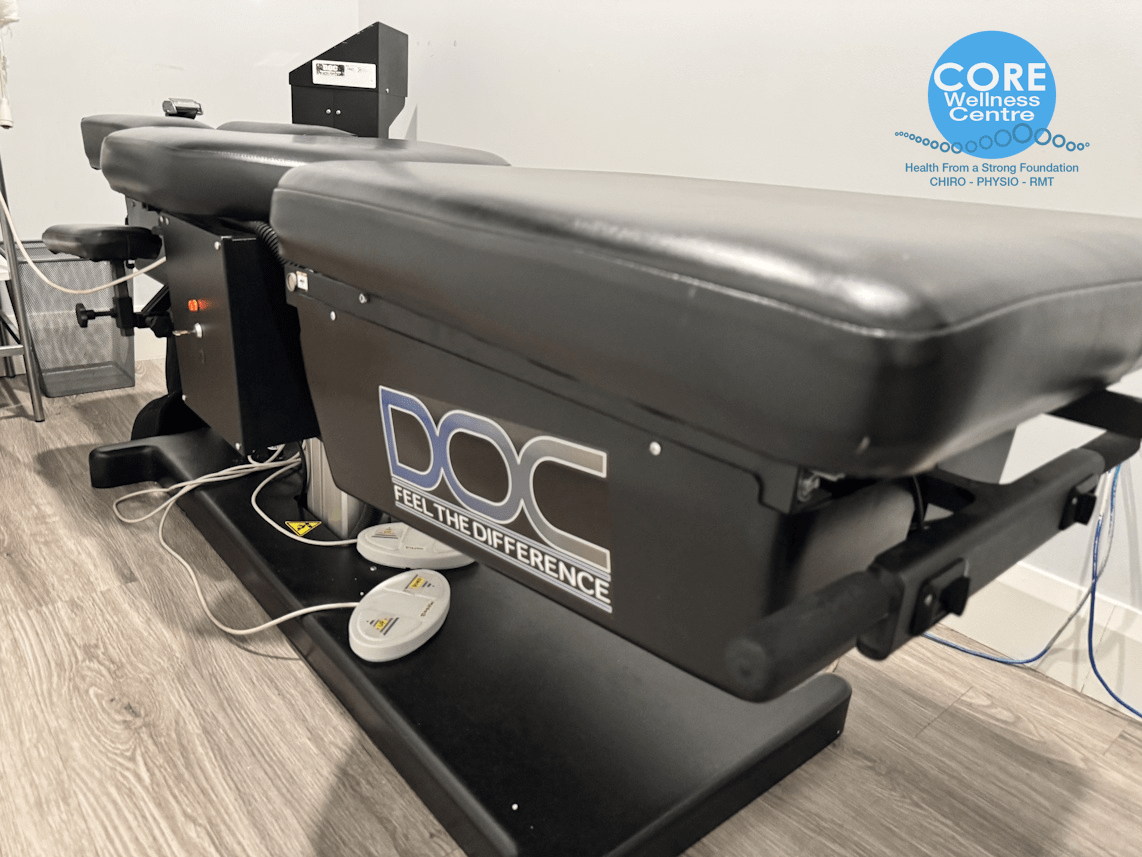
Core Wellness Centre offers the latest treatment options, spinal decompression,
chiropractic care, physiotherapy and RMT massage all in one location.
How Core Wellness Centre Treats Whiplash
At Core Wellness Centre, whiplash is treated with an individualized, multidisciplinary approach rather than a one-size-fits-all protocol, because the right treatment plan depends heavily on the severity of the injury and how it’s presenting in each person.
Initial assessment. Your first visit includes a detailed history of the accident or injury, a physical examination of range of motion and areas of tenderness, and screening for any red flag symptoms that would warrant further imaging or medical referral. This assessment is also what informs the treatment plan going forward.
Chiropractic care. Gentle spinal and neck adjustments can help restore proper joint mobility that’s often restricted after a whiplash injury, reducing stiffness and supporting a more complete recovery.
Physiotherapy. Targeted exercises and manual therapy techniques help rebuild strength and range of motion, address compensation patterns before they set in, and guide the appropriate pace of movement throughout recovery.
Additional modalities as needed. Depending on your specific presentation, treatment may also incorporate options like cold laser therapy or spinal decompression to support tissue healing and reduce inflammation.
Every plan is built around your specific injury, your recovery goals, and, if applicable, your accident claim timeline, not a fixed number of visits or a generic protocol.
Frequently Asked Questions
How long does whiplash usually last? Mild whiplash often resolves within two to three weeks. Moderate cases typically take four to eight weeks with treatment, and more severe cases can take three months to a year or longer. Most people recover within the first three months.
Can whiplash symptoms appear days later? Yes, this is very common. Symptoms like dizziness, fatigue, tingling in the arms, and difficulty concentrating often don’t appear until 24 to 72 hours after the injury, as adrenaline wears off and inflammation builds.
Is it normal to still have neck pain three months after a car accident? It happens, though it’s not the most common outcome. Research suggests roughly 15–20% of people with whiplash experience symptoms that extend beyond three months. If you’re still experiencing pain at this point, it’s worth a thorough reassessment to check for underlying complications and adjust your treatment plan.
Should I see a chiropractor or physiotherapist for whiplash? Both can play an important role, and many people benefit from a combined approach. Chiropractic care focuses on joint mobility and alignment, while physiotherapy focuses on strengthening, mobility, and functional movement. A multidisciplinary clinic can assess your specific case and recommend the right combination.
Can whiplash cause permanent damage? In most cases, no — full recovery is the norm, particularly with early and appropriate treatment. However, untreated or severe cases can occasionally lead to chronic pain or ongoing restricted mobility, which is part of why early assessment matters.
Don’t let whiplash symptoms linger. The sooner you’re
assessed, the better your chances of a full, timely recovery.
CALL us on (416) 479 – 8311 TODAY or simply book online below
Whiplash Treatment
Whiplash is uncomfortable, sometimes confusing, and for most people, very treatable. Understanding what’s normal, watching for the red flags that need urgent attention, and starting proper care early gives you the best chance at a full and timely recovery.
If you’ve recently been in a car accident or experienced a sudden neck injury, don’t wait for symptoms to fully develop before getting assessed. Book an appointment with our team at Core Wellness Centre, and we’ll build a treatment plan around your specific injury and recovery goals.
If your injury is related to a motor vehicle accident, read our full guide on navigating chiropractic care and SABS benefits in Ontario to understand how treatment and your insurance claim work together.