
Compression Socks and Stockings in Toronto
Core Wellness Centre provides measurement and fitting support for compression socks and stockings at our St Clair West clinic.
Graduated compression garments come in different lengths, materials and compression levels. The appropriate choice depends on your measurements, intended use, health history and any recommendations or prescriptions from your healthcare provider.
Dr. Kris Dorken, DC, is registered to practise as a chiropractor in Ontario and is a member of the College of Chiropractors of Ontario. He can discuss whether compression socks or stockings may be appropriate within the context of your assessment.
What Is the Difference Between Compression Socks and Compression Stockings?
The terms “compression socks” and “compression stockings” are often used interchangeably.
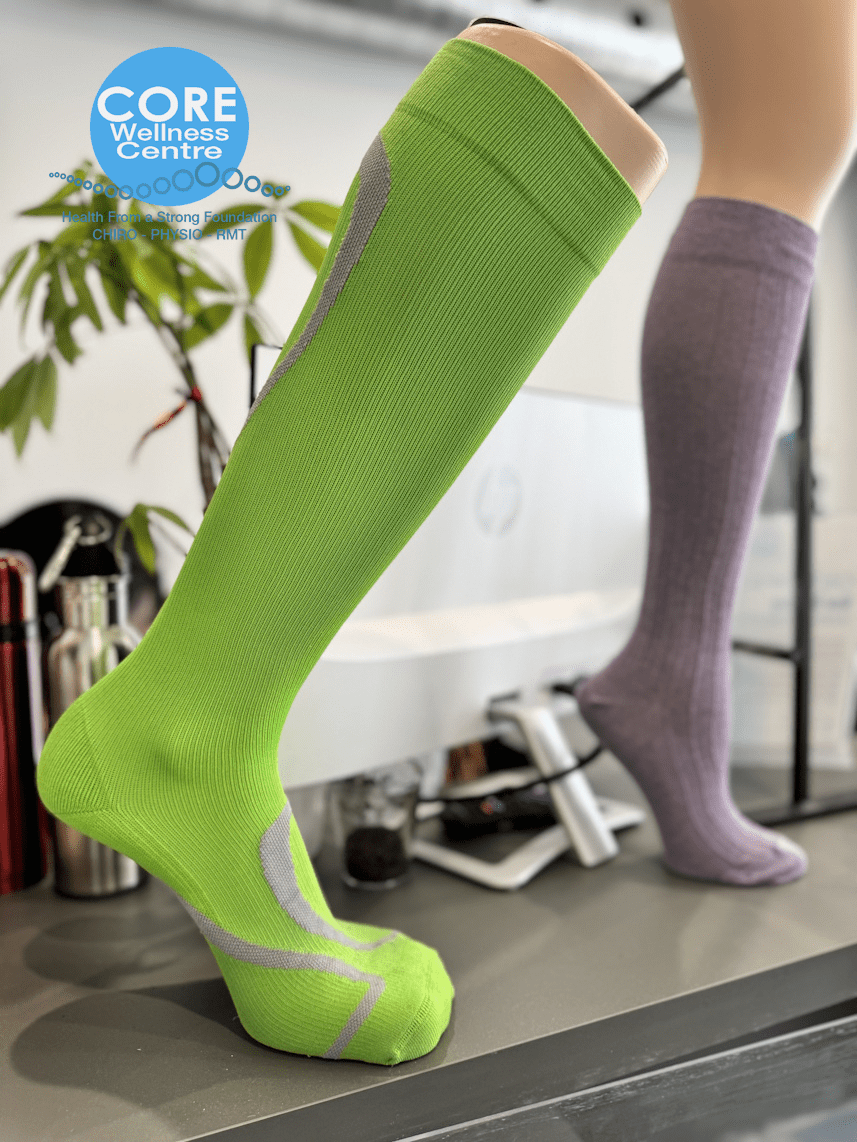
Compression socks commonly refer to knee-high garments. Compression stockings can include knee-high, thigh-high and waist-high styles.
Both are designed to apply measured pressure to the legs. The correct length, compression level and fit matter more than whether the product is called a sock or a stocking.
What Is Graduated Compression?
Graduated compression garments apply their greatest pressure near the ankle. The pressure gradually decreases higher up the leg.
When properly selected and fitted, this graduated pressure can support blood flow through the veins and may help manage certain types of leg swelling or discomfort.
The amount of pressure is measured in millimetres of mercury, shown as mmHg. A higher number means stronger compression, but stronger compression is not automatically better or appropriate for every person.
When Are Compression Stockings and Socks Considered?
People may ask about compression socks or stockings for reasons such as:
- Spending long periods standing at work
- Spending long periods sitting
- Leg tiredness or heaviness
- Mild leg or ankle swelling that has already been assessed
- Travel-related support
- Pregnancy-related swelling after speaking with a prenatal healthcare provider
- A diagnosed venous condition being managed by a physician
- Recovery following surgery when recommended by the surgical team
- Workplace or activity-related support
- A prescription or recommendation from another healthcare professional
This list does not mean compression garments are appropriate for every person with these concerns. Symptoms and medical conditions must be considered before selecting a product.
Compression garments should not replace a medical assessment for unexplained circulation problems, swelling or pain.
When Should You Seek Medical Assessment First?
Do not rely on compression socks to investigate or self-treat sudden or unexplained symptoms.
Seek prompt medical assessment if you experience:
- New swelling that mainly affects one leg
- Unexplained leg pain, warmth or redness
- A sudden or major change in existing swelling
- An open wound, infection or significant skin change
- New numbness or loss of sensation
- Symptoms following recent surgery without instructions from your surgical team
Call 911 for sudden chest pain or difficulty breathing.
Tell the practitioner about any diagnosed circulation, heart, kidney, skin or sensation concerns before purchasing compression garments. You may be advised to consult your physician or another appropriate healthcare professional first.
What Happens at a Compression Garment Appointment?
1. Discuss Your Needs
We will ask why you are considering compression garments, how you plan to use them and whether you have a prescription or recommendation from another healthcare provider.
Please bring any prescription, insurance requirements or previous compression garments to your appointment.
2. Review Relevant Health Information
Dr. Kris will review relevant health information and discuss whether compression garments may be appropriate within his scope of practice.
If your symptoms require medical or vascular assessment, you may be advised to contact your physician or another appropriate provider before proceeding.
3. Take Measurements
Measurements are taken according to the sizing requirements for the selected product.
These may include measurements around the ankle and calf and, depending on the garment length, other areas of the leg.
4. Select a Garment
Available options may include:
- Knee-high compression socks
- Thigh-high compression stockings
- Waist-high garments
- Open-toe or closed-toe styles
- Different materials, colours and sizes
- Different compression levels
Product availability may change. Contact the clinic if you need a particular style, brand or compression level.
5. Review Fit and Care
You will receive instructions about fit, wearing the garment and caring for the material.
Follow the directions provided by your prescribing professional, the clinic and the product manufacturer.
Choosing the Correct Compression Level
Compression garments are available in different pressure levels. The appropriate level depends on why the garment is being used, relevant health considerations and any directions from your healthcare provider.
Do not select a stronger medical compression level simply because it appears to offer more support.
If you have a prescription, bring it to your appointment. The prescription may specify the compression level, garment length and medical reason for use.
If no compression level has been recommended, the clinic will explain whether further medical guidance is needed.
Proper Fit Matters
A compression garment should feel supportive without creating unexpected pain, numbness or skin irritation.
The garment should lie smoothly against the skin. Rolling, folding or bunching the material can create areas of uneven pressure.
Contact the clinic or your healthcare provider if you experience:
- Increasing discomfort
- Numbness or tingling
- Changes in skin colour
- Skin irritation
- New swelling above or below the garment
- Difficulty wearing the garment as directed
A different size, style or compression level may need to be considered.
Wearing and Caring for Compression Garments
Follow the instructions supplied with your garment and any directions from your healthcare provider.
General care may include:
- Smoothing out wrinkles after putting the garment on
- Avoiding rolling or folding the top
- Washing the garment according to its label
- Allowing the garment to air-dry when directed
- Checking the material regularly for stretching or damage
- Replacing the garment when it no longer provides the intended fit
How long you should wear the garment each day depends on its intended use and the directions you receive.
Compression Socks for Work, Travel and Activity
Some people consider compression socks because they spend much of the day sitting or standing.
This may include healthcare workers, office workers, retail employees, travellers and people participating in selected activities.
Compression garments should not be presented as guaranteeing improved athletic performance, preventing blood clots or eliminating fatigue. Your health history, fit and intended use should guide the decision.
People with medical risk factors or unexplained symptoms should speak with an appropriate healthcare provider before using compression garments for travel or activity.
Insurance Coverage and Direct Billing
Some extended health benefit plans may cover eligible compression garments. Coverage varies by insurer and individual plan.
Before purchasing, ask your insurance provider:
- Whether compression socks or stockings are covered
- Whether a prescription is required
- Which regulated professionals may prescribe the garment
- Whether the prescription must include a diagnosis
- Whether a particular compression level is required
- Which receipts or product documents must be submitted
- Whether preauthorization is needed
- How many garments are covered during the benefit period
- The maximum eligible amount
Direct billing may be available for eligible plans. The clinic can provide available receipts and product documentation, but cannot guarantee approval or reimbursement.
Patients remain responsible for fees not paid by their insurer.
Frequently Asked Questions
Are compression socks and compression stockings the same?
The terms often overlap. “Socks” commonly describes knee-high garments, while “stockings” may also include thigh-high and waist-high options. The correct length, pressure and fit depend on the intended use.
Do I need a prescription?
Some products may be purchased without a prescription. Medical use, stronger compression levels and insurance reimbursement may require a prescription from an eligible healthcare professional.
Check with your insurer before purchasing if you plan to submit a claim.
What does mmHg mean?
Millimetres of mercury, or mmHg, describes the amount of pressure provided by the garment. Higher numbers indicate stronger compression.
The appropriate level should be selected according to your needs and any directions from your healthcare provider.
Can I wear compression socks all day?
The recommended wearing time depends on the product and reason for use. Follow the instructions from your healthcare provider, the clinic and the manufacturer.
Can compression garments be worn during pregnancy?
Compression garments may be recommended for some pregnancy-related concerns. Speak with your prenatal healthcare provider before selecting a medical compression level.
Can I wear compression socks while travelling?
Some people use compression socks during longer periods of sitting. Speak with your physician before travel if you have a history of blood clots, recent surgery, major swelling or other medical risk factors.
Do compression socks improve athletic performance?
The clinic does not guarantee improved performance or faster recovery. Product selection should reflect your intended activity, comfort, health history and professional guidance.
Are compression garments custom-made?
Many compression garments are manufactured in a range of standard sizes and selected using individual leg measurements. Some products may offer more specialized sizing. Ask the clinic which options are currently available.
Will insurance cover my compression garments?
Coverage depends on your insurance contract. Your plan may require a prescription, a specific compression level and supporting product documentation. Confirm these requirements before ordering.
Compression Socks and Stockings – Fitting in Toronto
Contact Core Wellness Centre to ask about currently available compression socks and stockings or to schedule an appointment.
Core Wellness Centre
726 St Clair Ave W
York, ON M6C 1B3
New patients are welcome.
This information is general and does not replace individual medical advice or an assessment by an appropriate healthcare professional.