You Don’t Have to Just Live With Lower Back Pain
Lower back pain is one of the most common reasons Canadians miss work, skip activities they love, and lie awake at night. In fact, it’s the number one reason people seek out a physiotherapist, and for good reason.
The good news? Lower back pain is highly treatable. With the right physiotherapy treatment plan, the majority of people experience significant relief within weeks, and many get out of pain for good.
This guide will walk you through exactly what physiotherapy for lower back pain looks like: what causes it, what your assessment involves, which exercises physiotherapists prescribe most often, and what to expect on your road to recovery.
1. What Causes Lower Back Pain?

Lower back pain isn’t a diagnosis – it’s a symptom, and understanding the root cause is what allows a physiotherapist to create a treatment plan that actually works long-term.
The most common causes include:
- Muscle strains and ligament sprains: Often from heavy lifting, sudden movements, or poor posture over time. This is the most frequent culprit.
- Herniated or bulging discs: When the soft tissue between vertebrae pushes outward and irritates nearby nerves, it can cause pain that radiates down the leg (sciatica).
- Degenerative disc disease: Age-related wear on the spinal discs that reduces their ability to cushion the vertebrae.
- Facet joint dysfunction: Stiffness or inflammation in the small joints along the spine, often causing pain with rotation and extension.
- Postural imbalances: Prolonged sitting, weak core muscles, and tight hip flexors place chronic stress on the lumbar spine.
- Sacroiliac (SI) joint dysfunction: Pain originating from the joint connecting the spine to the pelvis, commonly mistaken for hip or low back pain.
Many people find that their pain is not from a single dramatic injury but from months or years of accumulated stress on the spine. The encouraging part: all of these conditions respond well to physiotherapy.
2. When Should You See a Physiotherapist for Lower Back Pain?

Most lower back pain resolves on its own within a few days. But there are clear signs that professional physiotherapy treatment is the right next step:
- Pain that persists for more than 1–2 weeks without improvement
- Pain that radiates into your buttocks, leg, or foot
- Stiffness or reduced range of motion that affects your daily activities
- Pain that returns repeatedly after it seems to go away
- Worsening pain despite rest
- Weakness, numbness, or tingling in your legs
Important: Seek emergency care immediately if you experience:
- Loss of bladder or bowel control
- Severe pain following trauma (fall, car accident)
- Fever alongside back pain
- Unexplained weight loss with back pain
These may indicate conditions that require urgent medical attention.
If you’re unsure whether your symptoms warrant a visit, call our clinic. Our team can help you determine whether physiotherapy is the right fit and how urgently you should be seen.
3. What Happens at Your Physiotherapy Assessment?
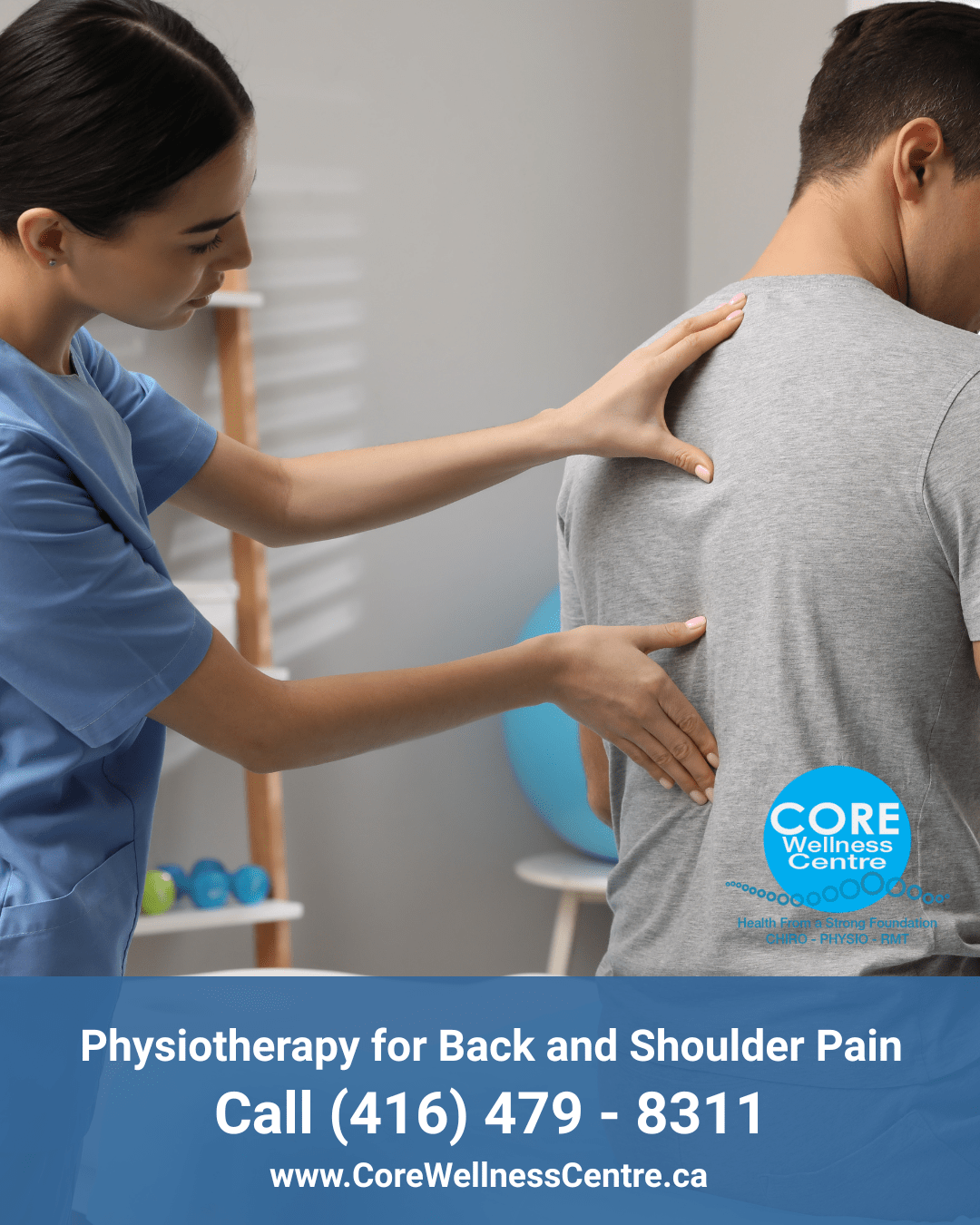
Your first appointment sets the foundation for your entire recovery. A thorough physiotherapy assessment for lower back pain typically includes:
Intake and Health History
Your physiotherapist will ask about when your pain started, what makes it better or worse, your activity level, your occupation, and any previous back issues or treatments. This context is essential — a construction worker’s pain has different contributing factors than someone who sits at a desk all day.
Postural and Movement Assessment
You’ll be observed standing, sitting, and moving through key ranges of motion: forward bending, backward bending, side bending, and rotation. This reveals where movement is restricted and which directions provoke or relieve your pain.
Neurological Screening
If you have any radiating pain, numbness, or tingling, your physiotherapist will assess nerve function through reflex testing, sensation checks, and muscle strength testing to identify whether a nerve is being compressed or irritated.
Hands-On Palpation
The physiotherapist will manually assess your spine, muscles, and joints to identify areas of tightness, tenderness, joint stiffness, or muscle guarding.
Functional Testing
Depending on your situation, this may include tests like the straight leg raise, prone instability test, or active straight leg raise — each of which helps pinpoint the source and nature of your pain.
By the end of your assessment, you’ll have a clear diagnosis (or working hypothesis), an explanation of what’s causing your pain, and a personalized treatment plan with realistic goals and timelines.
4. Physiotherapy Exercises for Lower Back Pain

Exercise is the cornerstone of lower back pain physiotherapy treatment. Passive treatments like massage and heat can reduce pain in the short term, but targeted therapeutic exercise is what creates lasting change by strengthening the muscles that support the spine, restoring mobility, and correcting movement patterns.
Below are the exercises most commonly prescribed for lower back pain, organized by phase of recovery.
Note: these descriptions are for educational purposes. Your physiotherapist will select and modify exercises specific to your condition.
Phase 1: Acute Pain Relief (First 1–2 Weeks)
The goal in the early phase is to reduce pain and inflammation, calm the nervous system, and begin gentle movement without aggravating the injury.
Exercise Sets & Reps What It Does
- Knee-to-Chest Stretch: Gently decompresses the lumbar spine and releases tight glutes and low back muscles
- Cat-Cow Stretch: Restores spinal mobility, reduces stiffness, and gently activates the core
- Pelvic Tilts (lying down): Activates the deep core stabilizers (transversus abdominis) without loading the spine
- Supported Child’s Pose: Gentle lumbar flexion stretch that relieves compression on spinal joints
- Diaphragmatic Breathing: Reduces nervous system tension and improves core activation patterns
Phase 2: Rebuilding Stability (Weeks 2–6)
As acute pain subsides, the focus shifts to rebuilding core and gluteal strength, the two muscle groups most responsible for spinal stability.
Exercise Sets & Reps What It Does
- Dead Bug: Trains deep core stabilizers to support the spine during arm and leg movements
- Glute Bridge: Strengthens the glutes and hamstrings, reducing load on lumbar muscles
- Bird Dog: Challenges the core and back extensors to maintain a neutral spine
- Side-Lying Clamshell: Activates the gluteus medius, improving hip and pelvic stability
- Prone Hip Extension: Strengthens the glutes and lower back while keeping the spine in neutral
- Supine Hip Flexor Stretch: Lengthens tight hip flexors that pull the pelvis forward and compress the lumbar spine
Phase 3: Functional Strength and Return to Activity (Weeks 4–12)
Once pain is well-managed and basic stability is established, exercises progress to loaded, functional movements that prepare you for work, sport, and daily life.
Exercise Sets & Reps What It Does
- Romanian Deadlift (light):Teaches the hip-hinge pattern safely — critical for bending and lifting without hurting your back
- Goblet Squat: Builds leg and core strength with a spine-neutral pattern
- Pallof Press: Anti-rotation core exercise that trains the spine to resist twisting forces
- Step-Up: Builds single-leg strength and hip stability for walking, stairs, and uneven terrain
- Thoracic Rotation Stretch: Improves upper back mobility, reducing compensatory stress on the lumbar spine
- Walking Program: One of the most evidence-supported interventions for low back pain — keeps the spine mobile and improves mood and circulation
A word about core training and lower back pain
You may have heard that a “weak core” causes lower back pain. The relationship is a bit more nuanced.
For most people, the issue isn’t a lack of six-pack strength, it’s poor neuromuscular coordination. The deep stabilizing muscles (transversus abdominis, multifidus) fire at the wrong time or not at all, leaving the spine unprotected during movement.
Physiotherapy exercises focus on retraining this timing and coordination, not just building bulk. This is why a physiotherapist’s exercise prescription is fundamentally different from a generic gym program.
5. What Else Does Physiotherapy Treatment for Lower Back Pain Include?
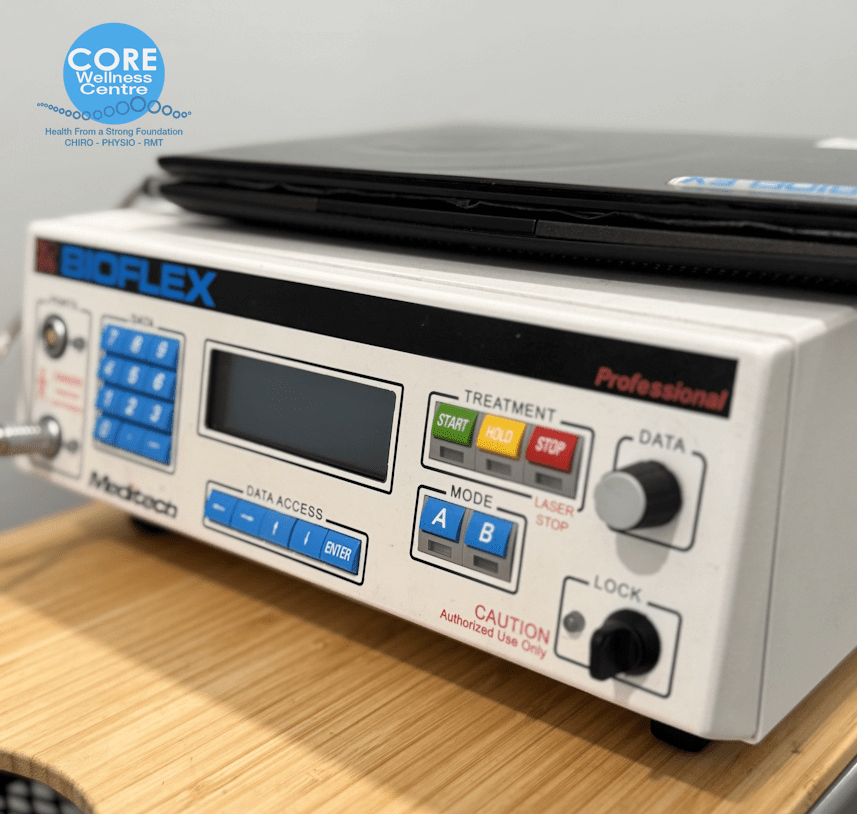
Therapeutic exercise is central, but a comprehensive physiotherapy treatment plan often incorporates additional modalities depending on your condition and response:
Manual therapy:
Hands-on joint mobilization and soft tissue techniques to restore movement, reduce pain, and improve tissue flexibility. Particularly effective for stiff facet joints and muscle guarding.
Dry needling:
Targeting trigger points in tight muscles to reduce pain and improve muscle function.
BioFlex Cold Laser Therapy:
Low-level laser therapy that accelerates tissue healing, reduces inflammation, and can provide significant pain relief for both acute and chronic lower back conditions. Core Wellness Centre is one of the few Toronto clinics offering this technology.
Education and movement retraining:
Learning how to sit, stand, bend, and lift in ways that protect your spine during recovery and prevent re-injury.
Shockwave therapy:
For chronic tendon or soft tissue pain that has not responded to other treatments.
Postural correction:
Identifying and addressing habitual postures or movement patterns that load the spine unevenly over time.
6. How Long Does Recovery from Lower Back Pain Take?
This is the question everyone wants answered, and the honest answer is: it depends.
Condition Type Typical Timeline Number of Visits
Acute muscle strain, disc herniation, chronic lower back pain, post-surgical rehabilitation, postural / repetitive strain, all vary by procedure
These are general estimates. Your Core Wellness Centre physiotherapist will give you a more precise timeline based on your assessment findings, the duration and severity of your symptoms, your overall health, and how consistently you follow through with your home exercise program.
The single biggest predictor of faster recovery? Active participation. Patients who do their home exercises between sessions recover significantly faster than those who rely on in-clinic treatment alone.
7. How to Prevent Lower Back Pain from Coming Back

Getting out of pain is one thing. Staying out of pain is another. Here’s what the evidence supports for long-term prevention:
Stay active.
The spine is designed for movement. Regular low-impact activity, walking, swimming, cycling, keeps the discs hydrated, muscles conditioned, and joints mobile.
Build and maintain core strength.
You don’t need to do extreme workouts. A consistent 10–15 minute routine targeting deep core and gluteal muscles, a few times per week, makes a dramatic difference.
Optimize your workspace.
Most chronic lower back pain in office workers is driven by prolonged sitting with poor lumbar support. Invest in proper ergonomics and take movement breaks every 45–60 minutes.
Learn to hip-hinge.
Teach yourself to bend from the hips rather than rounding your lower back when lifting, loading a dishwasher, or picking something up off the floor. This one habit prevents countless re-injuries.
Address stress.
Psychological stress significantly amplifies pain perception. Sleep, stress management, and mental health support are not optional — they are part of the treatment.
Return for a tune-up if pain flares.
Don’t wait for pain to become severe before coming back in. Early physiotherapy at the first sign of recurrence can stop a flare-up in its tracks and avoid weeks of disability.
Why Choose Core Wellness Centre, Toronto
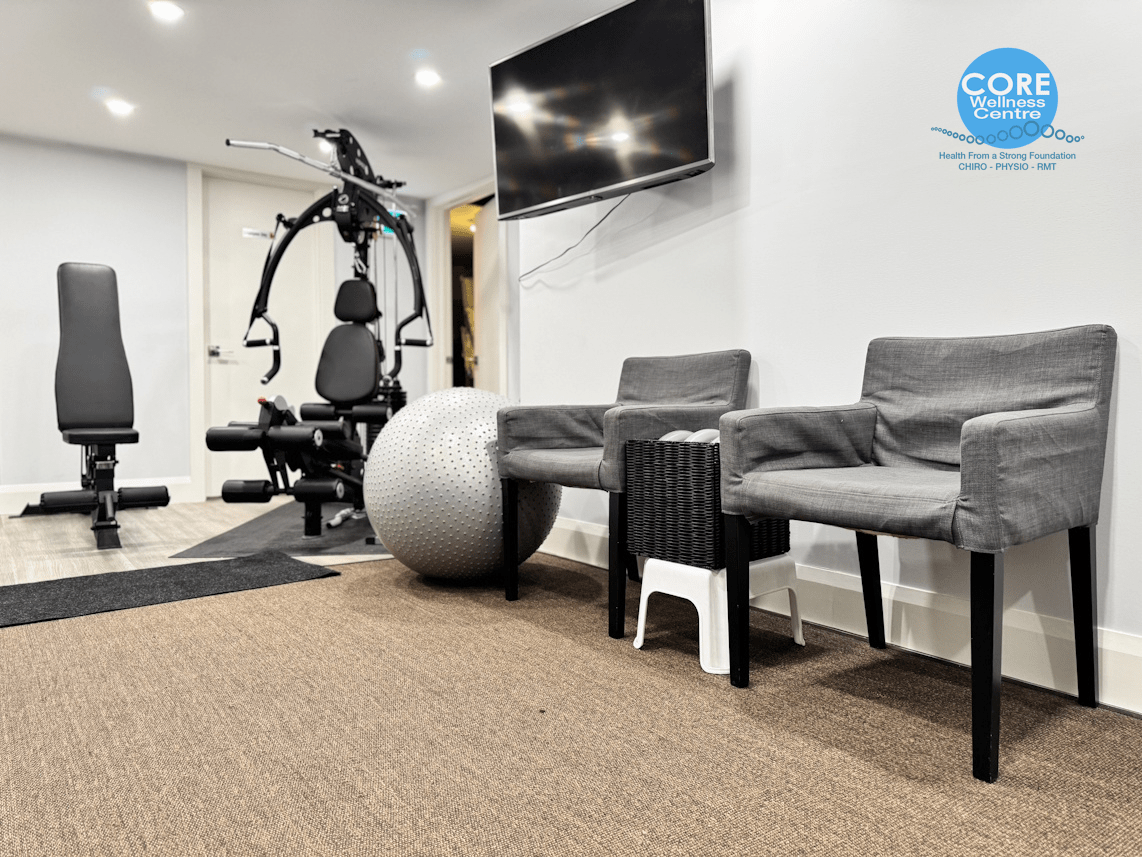
If lower back pain is affecting your quality of life, you don’t have to guess your way through it. Our team of experienced physiotherapists in Toronto will get to the root of what’s causing your pain and build a treatment plan designed to get you moving well.
- Why patients choose Core Wellness Centre for lower back pain:
- Thorough one-on-one assessments with no rushed appointments
- Evidence-based physiotherapy combined with advanced technologies like BioFlex Cold Laser Therapy, and Shockwave Therapy
- Multi-disciplinary team including physiotherapy, chiropractic, osteopathy and RMT massage
- Conveniently located in Toronto with flexible appointment times
- Personalized home exercise programs you can follow
Call us at (416) 479 – 8311 or book an appointment online. Same-week appointments available.
Core Wellness Centre | corewellnesscentre.ca | St Clair Ave W, Toronto, Ontario
Ready to Start Your Recovery?
CALL us on (416) 479 – 8311 or simply book online below
We Offer Direct Billing and Facilitate WSIB and MVA Claims
Medical Disclaimer: This blog post is for informational purposes only and does not constitute medical advice. Always consult a qualified healthcare professional before beginning any exercise program or treatment. If you are experiencing severe pain, neurological symptoms, or pain following trauma, seek medical attention promptly.