If you, or the person sleeping next to you, are tired of restless nights, you may be surprised to learn that a chiropractor can help with snoring. While most people reach for nasal strips or earplugs, chronic snoring often has a structural root cause that responds well to chiropractic care and physiotherapy.
At Core Wellness Centre in Midtown Toronto, Dr. Kris and our clinical team take a whole-body approach to snoring, addressing the spinal alignment, muscle tension, and postural issues that restrict your airway while you sleep.
This page explains exactly how chiropractic treatment for snoring works, what causes snoring in the first place, and when you should seek professional care.
Call: (416) 479 – 8311 | Book Your Assessment
Need a chiropractor for snoring?
If you need more information to know if going to a chiropractor for snoring, or would like to have an assessment, give our office a call (416) 479-8311.
There are many benefits to stop snoring naturally; however, if snoring persists you may want to see a specialist or our chiropractor for snoring in Toronto.
What Actually Causes Snoring?
Snoring happens when the soft tissues at the back of your throat including the soft palate, uvula, and tongue, vibrate as air passes through a partially obstructed airway during sleep.
The narrower the airway, the louder the snore.
But why does the airway become restricted? The causes are more varied, and more treatable, than most people realize:
Anatomical and Structural Causes
Cervical (neck) spine misalignment:
Forward head posture and cervical misalignments tilt the skull forward, reducing the diameter of the upper airway and forcing the soft tissues to partially collapse during breathing.
Jaw misalignment (TMJ dysfunction):
When the temporomandibular joint is out of position, the tongue may fall back during sleep, blocking the airway.
Enlarged tonsils or adenoids :
Structural tissue that naturally narrows the airway passage.
Deviated nasal septum:
Airflow is forced through a smaller unobstructed passage, increasing turbulence and vibration
Lifestyle and Postural Causes
- Poor sleep posture – Sleeping flat on your back allows gravity to pull the tongue and soft palate backward into the airway
- Excess body weight – Fatty tissue around the neck (even modest amounts) compresses the airway from outside; this is one of the most modifiable risk factors
- Alcohol and sedatives – Relax the throat muscles beyond their normal resting tone, dramatically increasing soft tissue collapse
- Smoking – Causes chronic nasal and throat inflammation, swelling the tissues that line the airway
- Chronic nasal congestion – From allergies, sinusitis, or environmental irritants, forcing mouth breathing which bypasses the nasal airway’s natural filtering and humidifying function
- Sleep deprivation – Overtired muscles, including throat muscles, relax more deeply, worsening obstruction
Age and Hormonal Factors
Aging:
Muscle tone naturally decreases with age, including in the throat; snoring prevalence rises sharply after age 40.
Menopause:
Hormonal shifts (particularly declining progesterone and estrogen) reduce upper airway muscle tone in women, which is why snoring increases significantly post-menopause.
Pregnancy:
Hormonal changes and weight gain can trigger snoring in women who have never snored before
Did you know? Approximately 45% of adults snore occasionally and 25% snore habitually. Men snore more frequently than women before age 60, but this gap narrows significantly after menopause.
The Snoring Myths That Keep You from Getting Help

Before exploring treatment, it’s worth addressing the misconceptions that prevent many people from seeking care:
Myth #1: “Snoring is just annoying, not dangerous.”
Fact: Chronic, loud snoring, particularly with gasping, choking, or pauses in breathing, is a recognized warning sign of obstructive sleep apnea (OSA), a serious medical condition linked to high blood pressure, heart disease, Type 2 diabetes, stroke, and depression.
Myth #2: “Only overweight people snore.”
Fact: While excess weight is a risk factor, snoring affects people of all body types. Anatomical differences, spinal alignment, sleep position, and nasal structure all contribute independently of weight.
Myth #3: “Only men snore.”
Fact: Women snore too, especially after menopause, when hormonal changes reduce upper airway muscle tone. Women’s snoring is chronically underdiagnosed because it tends to be quieter and dismissed.
Myth #4: “Snoring gets better on its own.”
Fact: Without addressing the underlying cause, snoring typically worsens with age. Early treatment produces the best results and may prevent the progression to sleep apnea.
Myth #5: “There’s nothing a chiropractor can do about snoring.”
Fact: Chiropractic care directly addresses several of the structural and postural drivers of snoring, particularly cervical misalignment, forward head posture, and muscle tension, that no nasal strip or mouthpiece can correct.
How Chiropractic Care Can Help You Stop Snoring
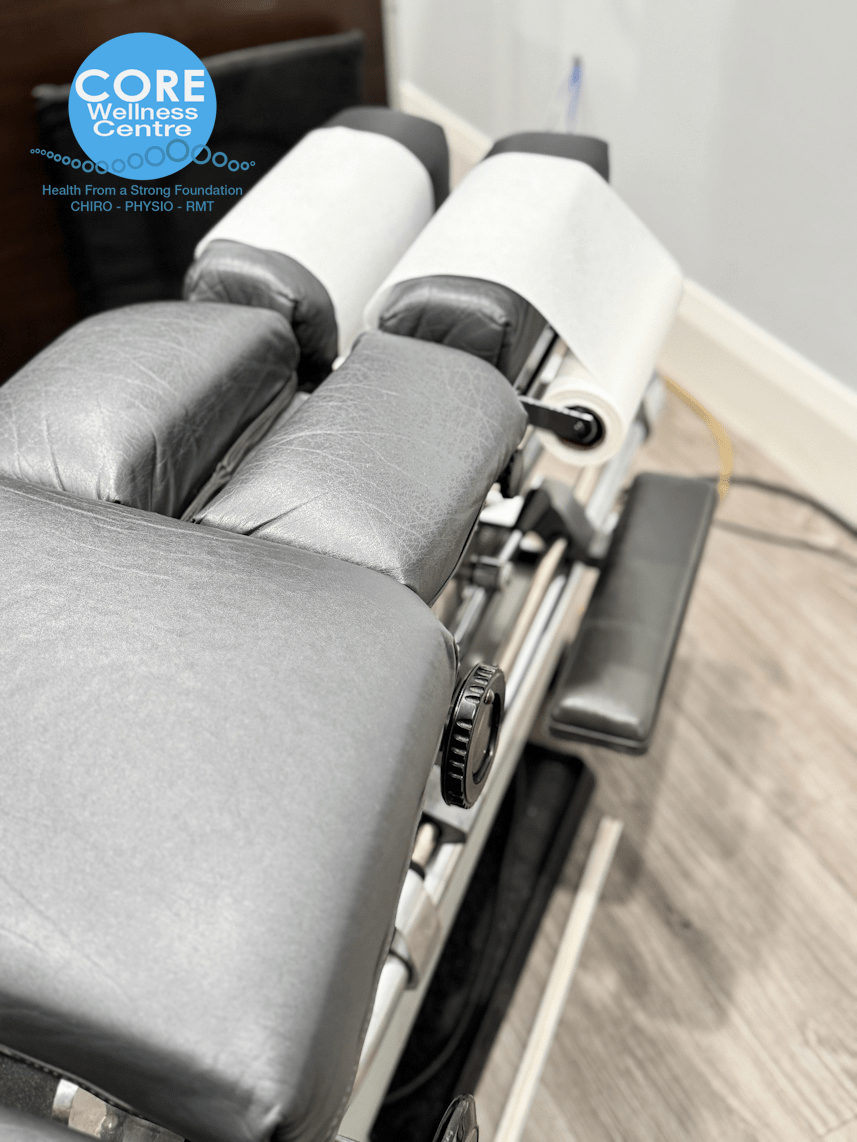
Chiropractic Care at Core Wellness Centre
Snoring isn’t always just a “throat problem.” In many cases, it’s also connected to how your neck and upper body are holding up during the day, and how that carries into the way your airway behaves at night.
That’s why chiropractic care for snoring often starts with looking at posture, neck position, and the way your joints and muscles support your head and jaw. When your head sits a little more comfortably over your spine, your jaw and tongue tend to have a better chance of resting in a more supportive position too.
At Core Wellness Centre, Dr. Kris Dorken uses a digital postural assessment to find what’s going on in your cervical spine and the surrounding muscle system. For many people, forward head posture, neck tightness, and joint restrictions build over time – especially from long hours at a desk, phone use, and driving.
When the neck muscles are constantly working, they can end up pulling the head and neck into positions that don’t allow the throat area to stay as open or relaxed as it should be. The goal of chiropractic care for snoring is to help restore healthier alignment and reduce the everyday tension patterns that can contribute to nighttime narrowing.
Chiropractic care for snoring also focuses on how the body supports breathing. Gentle, targeted work around the neck can help reduce nerve irritation and ongoing muscle tension that influences throat and jaw mechanics, and because the neck doesn’t work alone, the approach often includes support for the upper back as well.
When the thoracic spine is restricted, the body may compensate through the neck – creating even more strain where it matters most. Improving mobility and balance through the upper spine helps reduce that “workload” on the neck and supports better overall alignment heading into sleep.
Physiotherapy (with Cold Laser and Shockwave Therapy)
Physiotherapy adds another important layer by strengthening and training the areas involved in airflow and tissue control. This is where cold laser therapy and shockwave therapy can play a role alongside exercise-based strategies.
Cold laser therapy may help calm inflamed or irritated soft tissues and support recovery in tight, stressed areas around the neck and upper body. Shockwave therapy is sometimes used to support tissue health and mobility as well, particularly when there’s persistent stiffness or discomfort that doesn’t seem to change with movement alone.
Together with hands-on care and targeted rehab, these therapies can help create a more consistent “foundation” for the rest of the plan.
Registered physiotherapists also focus on strengthening and coordination through myofunctional work and breathing retraining.
These strategies help the tongue, soft palate, and throat muscles work more efficiently and stay better controlled during sleep. Breathing retraining can also reduce the habit of overusing neck and shoulder muscles when breathing support is needed, which often helps with overall comfort and reduces the tension that can make snoring worse.
Finally, chiropractic care for snoring and physiotherapy support are often most effective when the whole routine is reinforced between visits. That might include posture and ergonomic coaching during the day and guidance on sleeping positioning that helps maintain the improvements you’ve worked for.
Osteopathy for Snoring
Osteopathy can further complement this care by looking at the bigger picture of movement, mobility, and balance throughout the head, neck, jaw, and upper body.
Many people benefit from osteopathic techniques that aim to reduce restrictions and help tissues move more freely, especially where tension has built up around the base of the skull, the jaw connections, and the upper chest area.
When these areas feel less “stuck” and more balanced, it can be easier for the body to hold stable, supportive positions at night, making it simpler for the airway to function more smoothly.
Snoring vs. Sleep Apnea - An Important Distinction
Snoring vs Sleep Apnea: What’s the Difference?
Snoring and obstructive sleep apnea (OSA) can sound similar, but they don’t affect the airway in the same way. Simple snoring usually happens when the airway is partially narrowed. During sleep, the airway may be tight enough to create noise, but it generally doesn’t fully shut down.
With obstructive sleep apnea (OSA), the airway is more than just narrowed – it repeatedly collapses completely. This leads to breathing interruptions that can last 10 seconds or more, happening multiple times each hour. Instead of steady breathing, there are frequent pauses that can quickly affect the body.
Breathing patterns and oxygen levels are another major difference. In simple snoring, breathing is generally continuous, so oxygen levels tend to stay normal throughout the night. In OSA, those repeated airway blockages cause oxygen to drop repeatedly, which is one of the key reasons OSA is linked with serious health risks.
Sleep quality is often affected in both cases, but usually in different ways. Simple snoring can disrupt sleep mainly for a partner, with the person snoring often feeling less affected than the sleep partner. OSA, on the other hand, tends to cause severely disrupted sleep for both people, because the breathing interruptions are happening throughout the night and affect the nervous system and sleep cycles.
The health risks also differ. Simple snoring is often considered a lower-risk issue—especially when it’s isolated and not paired with major breathing pauses. OSA is high risk, and it has been associated with conditions such as heart disease, stroke, hypertension, and diabetes. That’s why OSA should be taken seriously and managed with medical care.
This is where chiropractic can be especially helpful for the right situation. For simple snoring, chiropractic care often has excellent results, particularly when the focus is on improving neck alignment, reducing tension, and supporting how the airway area holds space during sleep.
For obstructive sleep apnea, chiropractic isn’t a replacement for medical diagnosis and treatment. Instead, it can be used as a complementary approach alongside medical care, supporting posture, muscle tension, and overall comfort while you follow the appropriate plan with a healthcare provider.
| Simple Snoring | Obstructive Sleep Apnea (OSA) | |
|---|---|---|
|
Airway
|
Partially narrowed
|
Repeatedly collapses completely
|
|
Breathing
|
Continuous (noisy)
|
Pauses of 10+ seconds, multiple times/hour
|
|
Oxygen
|
Normal
|
Drops repeatedly during the night
|
|
Sleep quality
|
Disrupted (partner)
|
Severely disrupted (both)
|
|
Health risks
|
Low (if isolated)
|
High — heart disease, stroke, hypertension, diabetes
|
|
Chiropractic response
|
Excellent
|
Complementary (alongside medical care)
|
- Pauses in breathing during sleep
- Gasping or choking sounds at night
- Severe daytime sleepiness despite adequate time in bed
- Morning headaches
- Difficulty concentrating or memory problems
- Waking with a dry mouth or sore throat
If assessment suggests your snoring may involve sleep apnea, we will refer you appropriately, and chiropractic care can still play a valuable complementary role alongside CPAP therapy or other medical treatment.
Natural Ways to Reduce Snoring at Home
While chiropractic and physiotherapy address structural causes, these evidence-backed lifestyle adjustments can reduce snoring severity and are encouraged as part of your care plan:
Sleep Position
Sleep on your side:
The single most impactful positional change. Back sleeping allows gravity to pull soft tissues into the airway; side sleeping keeps the airway naturally open.
Elevate your head 4 inches:
Use a wedge pillow or adjust your bed to reduce soft tissue collapse without straining the neck.
Use a cervical support pillow:
Maintains proper neck curvature during sleep, supporting the alignment gains from chiropractic care
Lifestyle Modifications
Lose even a small amount of weight:
Just 5–10% body weight reduction can meaningfully reduce snoring in overweight individuals.
Avoid alcohol 2–3 hours before bed:
Alcohol’s muscle-relaxing effect on the throat is dose-dependent and time-limited.
Quit smoking:
Smoking-related airway inflammation can begin to improve within weeks of cessation.
Treat nasal congestion:
Saline rinses, nasal strips, or allergy management keep nasal airways clear and reduce the need to mouth-breathe
Oral and Throat Exercises
Research supports the following exercises for reducing snoring frequency and intensity (perform each 20–30 repetitions, twice daily):
Tongue slide:
Press the tip of your tongue firmly against the back of your upper teeth, then slide the tongue backward along the roof of the mouth.
Tongue stretch:
Stick your tongue out as far as possible, hold 5 seconds, retract. Repeat 10 times.
Vowel sounds:
Repeat “A-E-I-O-U” out loud slowly, exaggerating mouth movements – this tones the soft palate and pharyngeal muscles.
Jaw push:
Push your lower jaw forward slightly, hold 30 seconds; this strengthens the muscles that keep the jaw from falling back during sleep
What to Expect at Your First Visit for Snoring at Core Wellness Centre
Your first appointment is a comprehensive assessment, not just a treatment. Dr. Kris Dorken and our team will:
Take a detailed sleep and symptom history:
When snoring started, sleep position, partner observations, daytime symptoms, medications, and lifestyle factors.
Perform a full postural analysis:
Identifying forward head posture, cervical curvature, and thoracic restrictions that contribute to airway narrowing.
Assess cervical range of motion:
Identifying restrictions that affect head position during sleep
Evaluate jaw alignment:
Checking for TMJ dysfunction that may be contributing to airway obstruction
Review sleep hygiene and lifestyle factors:
To identify modifiable contributors
Design a personalized treatment plan:
Combining chiropractic adjustments, physiotherapy, RMT, and home exercises tailored to your specific presentation
Most patients notice improvement in snoring within 4–8 weeks of consistent treatment, with many reporting better sleep quality even earlier.
Why Toronto Patients Choose Core Wellness Centre for Snoring Treatment
Multidisciplinary team: chiropractor, physiotherapists, and RMTs working together on your snoring
Root-cause approach: we treat the structural and postural drivers, not just the symptoms
Dr. Kris Dorken DC: experienced in cervical spine conditions and their systemic effects
Conveniently located on St. Clair Ave W in Midtown Toronto: accessible by TTC
Same-week appointments available: no long waitlists for new patients
Covered by most extended health insurance plans: direct billing available
Holistic care: addressing sleep, posture, nutrition, and lifestyle as a whole
Call (416) 479 – 8311 | Book Your Appointment Online
If you’re living with insomnia, sleep apnea, or interrupted sleep, you may have tried various therapies without much success.
At Core Wellness Centre, Midtown Toronto, we offer chiropractors for snoring and sleep issues as well as comprehensive treatment plans for Physiotherapy, RMT or Osteopathy if required.
We offer Direct Billing and facilitate WSIB and MVA Claims
CALL us on (416) 479 – 8311 TODAY
or simply book online below
Frequently Asked Questions About Chiropractic Care for Snoring
Can a chiropractor actually help stop snoring?
How does the spine affect snoring?
Is snoring a sign of sleep apnea?
Can physiotherapy help with snoring?
Does insurance cover chiropractic treatment for snoring in Ontario?
What's the difference between a mouth guard and chiropractic treatment for snoring?
Are there specific chiropractic techniques or approaches for addressing snoring?
Chiropractors may use various techniques tailored to the individual’s needs. Common approaches include spinal adjustments, soft tissue therapy and exercises to improve posture and breathing mechanics.
What should I expect during a chiropractic session for snoring?
During your initial visit, Dr. Kris will likely conduct a thorough evaluation of your spine, posture, and overall health.
He may also discuss your snoring patterns, sleep habits, and any other relevant factors.
At Core Wellness Centre, we have diagnosis tools available such as digital posture analysis and x-rays if required. Based on this assessment, he will develop a personalized treatment plan, which may include adjustments and other therapies.
How many sessions might be needed to see improvement in snoring?
The number of sessions needed varies depending on individual factors such as the severity of the snoring, underlying health issues, and how well the body responds to treatment.
Some people may experience improvements early on, while others may require ongoing care to maintain results. Dr. Kris will monitor your progress and adjust the treatment plan accordingly.