
If your headaches seem to start at the base of your skull, or they build every afternoon after hours at a laptop, your neck may be part of the story. Neck pain and headaches show up together so often that Ontario researchers developed a clinical practice guideline specifically for managing them.
At Core Wellness Centre, our chiropractic, physiotherapy and massage therapy team sees this pattern regularly at our St. Clair West clinic. A common example is someone working from a kitchen table or couch whose headache creeps in by mid-afternoon, sits on one side, and eases a little when they rub the top of their neck. This guide answers the questions we hear most, explains what the research says, and helps you decide when to book an assessment and when to see your doctor first.
Can neck pain really cause headaches?
Yes. Nerves from the upper neck feed into the same area of the brainstem that processes sensation from the head and face. When joints, muscles or other tissues in the upper neck are irritated, your brain can register that signal as pain in your head. This is called referred pain.
That shared wiring is why a stiff neck and a headache so often arrive together. It also explains why treating the neck can sometimes change headache patterns, and why it won’t help every type of headache.
How do I know if my headache is coming from my neck?
The two headache types most closely linked to neck pain are tension-type headache and cervicogenic headache. Migraine is a separate neurological condition, although neck pain often comes along with it.
Tension-type headache
Tension-type headache is the most common headache. It usually feels like pressure or a tight band around the forehead, temples or back of the head, on both sides. The pain is typically mild to moderate and doesn’t get worse with routine activity. Many people notice tight neck and shoulder muscles, stress and long screen days at the same time.
Cervicogenic headache
Cervicogenic means “starting in the neck.” These headaches usually sit on one side and begin in the neck before spreading toward the back of the head, the forehead or around the eye. Certain neck movements or sustained postures often bring them on, and neck movement is usually reduced on the same side.
Migraine
Migraine tends to cause throbbing pain, often on one side, with nausea and sensitivity to light or sound. Some people see visual changes (aura) beforehand. Migraine needs a medical diagnosis and a physician-led treatment plan. The Ontario guideline advises clinicians to rule out migraine and other causes before treating a headache as neck-related.
Signs that your neck may be involved include:
- Headache that starts in the neck or base of the skull
- Pain that changes when you turn, tilt or hold your head in one position
- Neck stiffness or reduced range of motion
- Tenderness at the top of the neck that reproduces your familiar headache
- Headaches that follow a neck injury, such as whiplash-related headaches after a car accident
When is a headache a medical emergency?
Most headaches are not dangerous, but some need urgent medical care. Call 911 or go to the nearest emergency department if you have:
- A sudden, severe headache that peaks within seconds or a minute
- A headache after a head injury, especially with confusion, vomiting or drowsiness
- Fever with a stiff neck or a new rash
- Weakness, numbness, vision loss, double vision, trouble speaking or loss of balance
- A headache with fainting or a seizure
Book with your family doctor soon if headaches are new after age 50, steadily worsening, waking you from sleep, or changing in pattern. For non-urgent questions, Ontario’s free Health811 line connects you with a registered nurse. Screening for these warning signs is part of every headache assessment at our clinic, and we refer to physicians whenever they appear.
What does Ontario research say about headaches from neck pain?
The most useful evidence comes from the Ontario Protocol for Traffic Injury Management (OPTIMa) Collaboration, led by researchers at Ontario Tech University and the Canadian Memorial Chiropractic College in Toronto. In 2016, the group reviewed the research on non-drug treatments for headaches associated with neck pain [1]. In 2019, it published a clinical practice guideline for adults whose headaches had lasted longer than three months [2].
In plain language, the guideline recommends that clinicians:
- Rule out serious causes and migraine first, then classify the headache as tension-type or cervicogenic
- Plan care in partnership with the patient and include structured education
- Consider gentle, low-load endurance exercises for the deep neck and shoulder blade muscles, for both tension-type and longer-lasting cervicogenic headaches
- Consider general exercise, multimodal care (spinal mobilization, neck exercise and posture correction) or clinical massage for chronic tension-type headaches
- Not offer neck manipulation as the only treatment for tension-type headaches
- Consider manual therapy (manipulation with or without mobilization) to the neck and upper back for cervicogenic headaches lasting longer than three months
- Reassess at every visit to check progress and decide whether a referral is needed
One finding stands out: exercise is a common thread across both headache types. Hands-on care can play a role, but the research points to an active plan rather than passive treatment alone.
For cervicogenic headaches, the Ontario guideline supports considering manual therapy to the neck and upper back as part of care. For tension-type headaches, it advises against relying on neck manipulation alone.
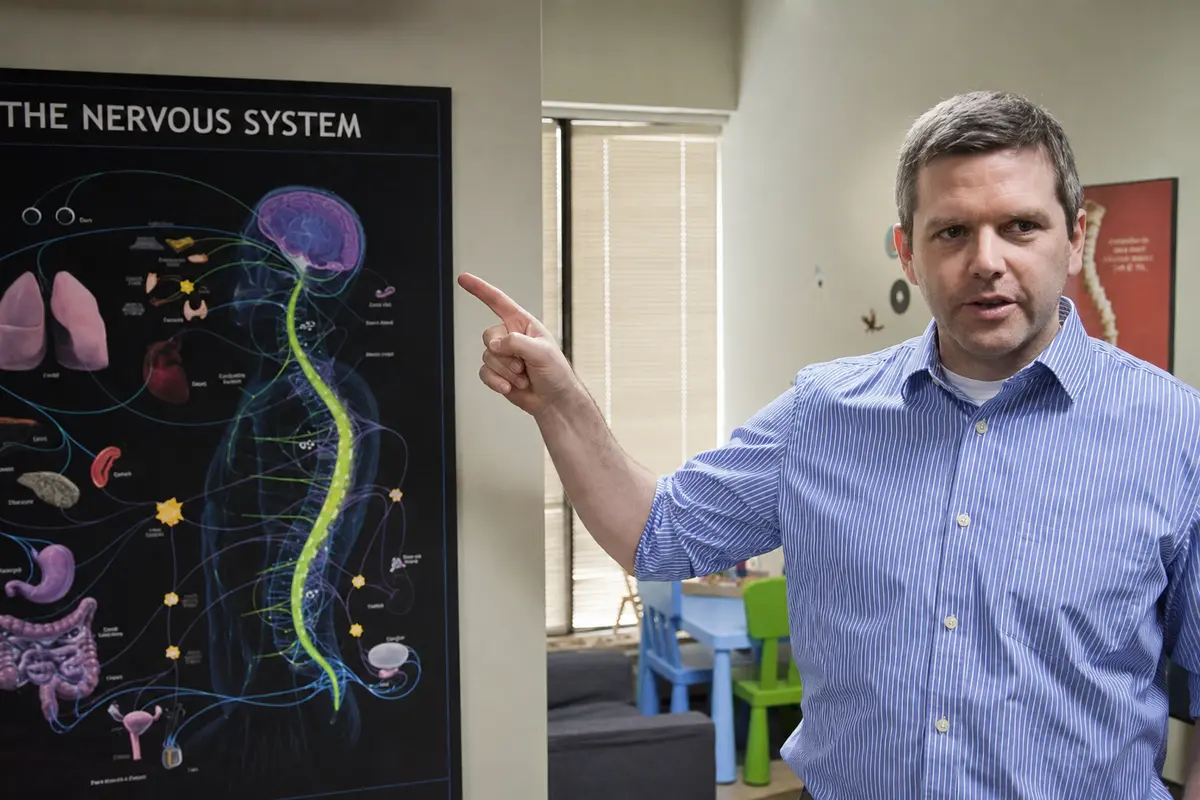
At Core Wellness Centre, chiropractic care for headaches starts with a detailed history and examination. Dr. Kris Dorken, DC, looks at when your headaches began, how often they occur, what triggers them, and how your neck and upper back move. If your headaches appear related to your neck, a plan may include:
- Spinal manipulation or gentler mobilization of the neck and upper back
- Soft tissue therapy for tight neck and shoulder muscles
- Specific exercises to build endurance in the deep neck muscles
- Practical advice on workstation setup, sleep position and daily habits
Before any treatment, your chiropractor will explain the expected benefits, the risks and the alternatives, so you can make an informed choice. Manipulation is never the only option, and many people do well with mobilization and exercise instead.
Can physiotherapy help with headaches?
Yes, physiotherapy can help when headaches are linked to the neck, particularly through exercise. Physiotherapists are trained to retrain the small, deep muscles that support the head and the muscles that hold the shoulder blades in place.
At our clinic, physiotherapy for neck-related headaches often focuses on:
- Gentle chin-nod exercises that build deep neck muscle endurance
- Shoulder blade strength and posture endurance for desk work
- Joint mobilization to restore neck and upper back movement
- Education about pacing, triggers and returning to activity
These exercises are low-load by design. They feel easy at first, and that is intentional; the goal is endurance and control rather than strength alone.
Does massage therapy help tension headaches?
The Ontario guideline lists clinical massage as an option for chronic tension-type headaches. Registered massage therapy can ease tension in the neck, shoulders and jaw and is often combined with exercise from a chiropractor or physiotherapist.
Some patients also include osteopathy in their care. The research on osteopathy for neck-related headaches is more limited, and your practitioner should be open with you about that.
Should I see a chiropractor or a physiotherapist for headaches?
Both chiropractors and physiotherapists in Ontario are regulated health professionals who can assess and treat headaches related to the neck. The better first stop depends on your preferences, your insurance coverage and what your assessment shows. Because our team works under one roof, we can coordinate care rather than making you choose. Our guide on whether to see a chiropractor or physiotherapist explains the differences in more detail.
What can I do at home to ease headaches from neck pain?
Small daily changes often make the biggest difference between visits. Try these:
- Raise your screen so the top sits at or just below eye level, and bring your keyboard close
- Take a short movement break every 30 to 45 minutes of desk or phone time
- Practise gentle chin nods: lie on your back, nod your chin slightly as if saying “yes,” hold for a few seconds and relax
- Squeeze your shoulder blades gently back and down several times an hour
- Use heat on tight neck muscles; our guide to heat or cold for pain explains when each works best
- Choose a pillow that keeps your neck level with your body when you sleep
- Drink water regularly and avoid skipping meals
- Notice jaw clenching, which can feed into head and neck pain; read more about TMJ and jaw pain
- Keep a headache diary noting frequency, intensity, triggers and medication use
If long hours on your phone are part of the picture, our article on neck pain from looking down and our healthy posture habits offer more ideas. Stop any exercise that makes your headache or neck pain clearly worse, and let your practitioner know.
How many treatments will I need?
It varies. How long you’ve had headaches, how often they occur and your overall health all play a role. We set measurable goals with you, such as fewer headache days per month or better neck movement, and reassess at each visit, as the guideline recommends. If you are not making progress, we will talk about changing the plan or referring you to your physician.
Is headache treatment covered in Ontario?
Most extended health benefit plans include chiropractic, physiotherapy and registered massage therapy, and we offer direct billing to many insurers. If your headaches began after a car accident, care may be funded through your auto insurer; our guide to Ontario accident benefits (SABS) and our car accident clinic explain how that works. Headaches linked to a workplace injury may be covered through WSIB.
What happens at your first headache assessment?
Your first visit focuses on understanding your headaches, not rushing into treatment. You can expect:
- A conversation about your headache history, triggers, medications and goals
- Screening for warning signs that need a physician’s care
- An examination of your neck, upper back, posture and jaw
- A clear explanation of what we found and your options, including risks and alternatives
- A plan you agree to, or a referral if another provider is a better fit
Learn more about what to expect at your first visit. Core Wellness Centre is at 726 St. Clair Ave W in Toronto, with free parking behind the clinic. Call (416) 479-8311 or book online to arrange an assessment.
Research references
- Varatharajan S, Ferguson B, Chrobak K, et al. Are non-invasive interventions effective for the management of headaches associated with neck pain? An update of the Bone and Joint Decade Task Force on Neck Pain and Its Associated Disorders by the OPTIMa Collaboration. European Spine Journal. 2016;25(7):1971–1999.
- Côté P, Yu H, Shearer HM, et al. Non-pharmacological management of persistent headaches associated with neck pain: A clinical practice guideline from the Ontario Protocol for Traffic Injury Management (OPTIMa) Collaboration. European Journal of Pain. 2019;23(6):1051–1070.
This article is for general education and is not a substitute for an individual assessment by a regulated health professional.