
You went to pick something up off the floor and felt it immediately, that sharp, seizing pain that stops you in your tracks. Or maybe it has been building slowly for weeks: a dull ache that greets you every morning, stiffens up after sitting at your desk, and never quite goes away no matter how much you stretch.
Lower back pain is one of the most common health complaints aound the world, it’s the
leading cause of disability globally, affecting an estimated 619 million people.
In Canada, it is one of the top reasons people miss work and seek medical care. And yet, despite how common it is, lower back pain remains one of the most misunderstood and undertreated conditions people experience.
Many people try to tough it out, assuming it will go away on its own, and others are searching for long-term solution without knowing the source of the issue. Some have had lower back pain on and off for years and just come to accept it.
At Core Wellness Centre in Midtown Toronto, Dr. Kris and our physiotherapy team help patients with lower back pain every single day.
From first-time flare-ups to long-standing chronic conditions, we identify the real cause of your pain and build a treatment plan designed to resolve it , not just manage it.
This article will walk you through everything you need to know about lower back pain: what causes it, what your symptoms mean, when to seek urgent care, and how chiropractic care and physiotherapy can help you get back to living without limitation.
Your Lower Back Pain Has a Cause, and a Solution.
Call Core Wellness Centre Today on (416) 479 – 8311
We offer Direct Billing and Facilitate WSIB and MVA Claims
What Is Lower Back Pain? Understanding Your Lumbar Spine
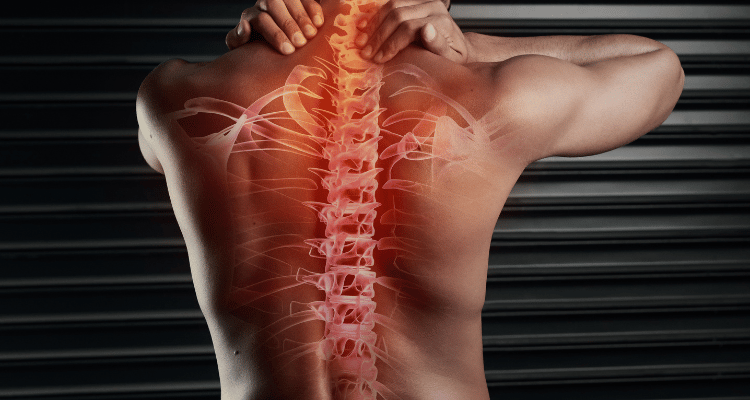
Before exploring what goes wrong, it helps to understand what is actually going on in your lower back when everything is working properly.
The Structure of Your Lower Back, Explained Simply
Your lower back is made up of five vertebrae, the bones of your spine – labelled L1 through L5. These vertebrae are stacked on top of one another, and between each pair sits a soft, spongy disc that acts as a cushion and shock absorber. Running through the centre of the entire stack is your spinal cord, which carries nerve signals back and forth between your brain and the rest of your body.
At each level of the spine, nerve roots branch out from the spinal cord and travel outward, some going down into your legs and feet. Surrounding all of this are layers of muscles, tendons, and ligaments that hold everything in place and power every movement you make.
Think of your lumbar spine like a stack of building blocks held together by strong rubber bands, surrounded by supportive cables, with a sensitive electrical wire running through the middle. When everything is aligned and working together, you move freely and without pain. When any one part of that system is disrupted, a shifted block, a snapped rubber band, a pinched wire, the whole system feels it.
Why the Lower Back Is So Vulnerable
Your lower back is the meeting point of two major demands: flexibility and load bearing. It needs to be mobile enough to let you bend, twist, and rotate in every direction, while simultaneously supporting the entire weight of your upper body, your torso, arms, and head, in every position you place yourself throughout the day.
Add to this the fact that most modern lifestyles involve hours of sitting, minimal movement, and repetitive patterns that place chronic, asymmetric stress on the lumbar spine, and it becomes clear why lower back pain is so widespread.
The Most Common Causes of Lower Back Pain
Lower back pain causes and treatment vary significantly depending on what is actually driving the pain. Here are the most common conditions we assess and treat at Core Wellness Centre.
Muscle Strains and Ligament Sprains
Lower back pain causes and treatment vary significantly depending on what is actually driving the pain. Here are the most common conditions we assess and treat at Core Wellness Centre.
The most frequent cause of sudden-onset lower back pain is a strain of the lumbar muscles or a sprain of the spinal ligaments, and this happens when the muscles or connective tissue of the lower back are overstretched or partially torn, for example, from lifting something heavy with poor form, making a sudden awkward movement, or overloading the back during exercise or sport.
The result is immediate localized pain, stiffness, and muscle spasm that can range from mildly uncomfortable to acutely debilitating. The good news is that muscle strains and ligament sprains, when treated properly and promptly, typically respond very well to chiropractic and physiotherapy care.
Herniated or Bulging Discs

The discs between your vertebrae are tough on the outside and soft and gel-like on the inside. When a disc is subjected to significant pressure, from a heavy lift, a sudden impact, repetitive loading, or gradual wear over time, the soft inner material can push outward against the disc’s outer wall (a bulging disc) or break through it entirely (a herniated disc).
When a herniated disc presses against one of the nearby nerve roots branching out from the spinal cord, it produces pain that can extend far beyond the lower back itself, radiating down through the buttock, thigh, calf, and into the foot. This is known as sciatica, and it is one of the most disruptive and commonly misunderstood consequences of a lumbar disc herniation.
The most commonly affected disc levels in the lower back are L4-L5 and L5-S1 the two lowest levels of the lumbar spine, which bear the greatest mechanical load during daily activity.
Sacroiliac (SI) Joint Dysfunction
The sacroiliac joints are located on either side of the base of your spine, where the sacrum connects to the two sides of your pelvis. These joints bear and transfer the load between your upper body and legs during every step you take.
When the sacroiliac joint becomes misaligned, inflamed, or moves too much or too little, it produces a deep, aching pain in the lower back and buttock area that is frequently mistaken for disc-related pain or sciatica. SI joint dysfunction is particularly common in people who sit for long periods, walk with an uneven gait, have had a fall or a motor vehicle accident, or are pregnant or postpartum.
Accurate diagnosis of SI joint dysfunction is important, because its treatment differs from that of a disc herniation, and misidentifying it leads to treatment approaches that simply do not work.
Degenerative Disc Disease
Despite its somewhat alarming name, degenerative disc disease is not actually a disease, it is a natural aging process that occurs in the spinal discs over time. As we age, our discs gradually lose some of their height and water content, becoming thinner and less flexible. This reduces their ability to absorb shock and creates more stress on the facet joints and surrounding muscles.
It is important to understand that disc degeneration does not always cause pain. Many people have significant disc degeneration on imaging with no symptoms at all. However, in some individuals, particularly those with alignment issues or physically demanding lifestyles, degenerative disc changes can contribute to chronic lower back pain, stiffness, and reduced mobility.
Other Factors of Low Back Pain
- Beyond these structural causes, lower back pain is also influenced by:
- Chronic stress and emotional tension, which manifests as persistent muscle tightening in the lower back and shoulders
- Poor sleep, which reduces the body’s ability to repair and recover spinal tissue overnight
- Excess body weight, which increases the compressive load on lumbar discs and joints
- A sedentary lifestyle, which weakens the muscles that support the spine
- Previous injuries that were not fully rehabilitated, often the hidden driver of recurring back pain
Acute vs. Chronic Lower Back Pain, What Is the Difference?

Not all lower back pain is the same, and understanding whether your pain is acute or chronic shapes the entire treatment approach.
Acute Lower Back Pain
Acute lower back pain is pain that has been present for less than six weeks. It usually has a clear cause, a lift, a fall, a sudden awkward movement, and the onset of pain is immediate or develops within hours or days of the triggering event.
The good news about acute lower back pain is that it is generally very responsive to treatment. With the right care, chiropractic adjustments, manual physiotherapy, and targeted exercise, most cases of acute lumbar pain resolve significantly within two to six weeks.
The risk, however, is this: acute lower back pain that is not properly treated has a well-documented tendency to recur and eventually become chronic. Each episode leaves behind a degree of scar tissue, muscle inhibition, and joint stiffness that makes the next episode more likely and more severe. Early, effective treatment is not just about resolving the current episode, it is about preventing the next one.
Chronic Lower Back Pain
Chronic lower back pain is pain that has been present for more than twelve weeks. It may have started as an acute injury that never fully resolved, or it may have developed gradually over months or years without a single clear triggering event.
Chronic lower back pain is more complex to treat because, over time, it involves changes not just in the spine and muscles but in the nervous system itself.
When pain signals fire repeatedly over a prolonged period, the nervous system can become increasingly sensitive, amplifying pain signals even when the original tissue damage has healed.
This process, called central sensitization, is why chronic back pain can sometimes feel disproportionate to the structural findings on imaging.
This does not mean chronic lower back pain is untreatable, far from it. It simply means that recovery requires a comprehensive, multi-faceted approach that addresses both the physical structures and the nervous system’s sensitivity.
Significant improvement is achievable for the vast majority of people with chronic lower back pain who commit to an evidence-based treatment program.
Recurrent Lower Back Pain
Many people experience a pattern of lower back pain that comes and goes, weeks or months of relative comfort interrupted by episodes of acute flare-up.
This recurring pattern is almost always a sign that the underlying cause has never been fully identified and properly addressed. The spine is compensating, adapting, and periodically reaching its limit.
If this pattern sounds familiar, it is one of the clearest signs that a professional assessment is needed, not just treatment of the current episode, but a thorough evaluation of what is making you vulnerable to repeated injury.
Red Flag Symptoms – When to Seek Urgent Medical Care
The vast majority of lower back pain is musculoskeletal in nature, meaning it involves muscles, joints, discs, or nerves, and it is not medically dangerous. However, a small percentage of lower back pain cases involve more serious underlying conditions that require immediate medical attention.
Go to the Emergency Room Immediately If Your Back Pain Is Accompanied By:
- Loss of bladder or bowel control, this is the most critical red flag, as it may indicate cauda equina syndrome, a rare but serious spinal emergency requiring urgent surgical intervention
- Sudden, severe weakness in both legs or inability to walk
Back pain following a significant trauma, a car accident, a fall from height, or a direct impact to the spine - Fever, unexplained weight loss, or night sweats alongside back pain, possible signs of infection or, rarely, a spinal tumour
- Back pain in someone with a known history of cancer, warrants urgent investigation for possible spinal metastasis
- Numbness in the saddle area, the inner thighs, groin, and genitals
These symptoms are rare, but they are important to recognize. If you experience any of them, do not wait, go to the emergency room immediately.
See a Chiropractor or Physiotherapist Promptly If You Have:
- Lower back pain that has been present for more than two weeks without improvement
- Pain that is gradually getting worse rather than improving
- Tingling, numbness, or weakness that radiates into the leg or foot
- Pain that consistently wakes you from sleep or does not change with position
- Lower back pain following a car accident, sports injury, or fall — even a minor one
- Recurring episodes of lower back pain that keep coming back
- Back pain that is affecting your ability to work, sleep, or perform daily activities
When in doubt, always choose assessment over waiting. Dr. Kris at Core Wellness Centre can evaluate your symptoms, identify any red flags, and refer you for emergency care or imaging if required.
How Chiropractic Care Addresses Lower Back Pain
Chiropractic care is one of the most thoroughly researched conservative treatments available for lower back pain. A landmark study published in the Journal of the American Medical Association found that spinal manipulative therapy is as effective as prescription medication for acute lower back pain, without the risks of side effects or medication dependency.
For both acute and chronic lower back pain, chiropractic care consistently demonstrates strong clinical outcomes.
Spinal Decompression Therapy
For patients whose lower back pain is driven by a herniated disc, bulging disc, degenerative disc disease, or sciatic nerve compression, spinal decompression therapy is one of the most effective non-surgical treatment options available.
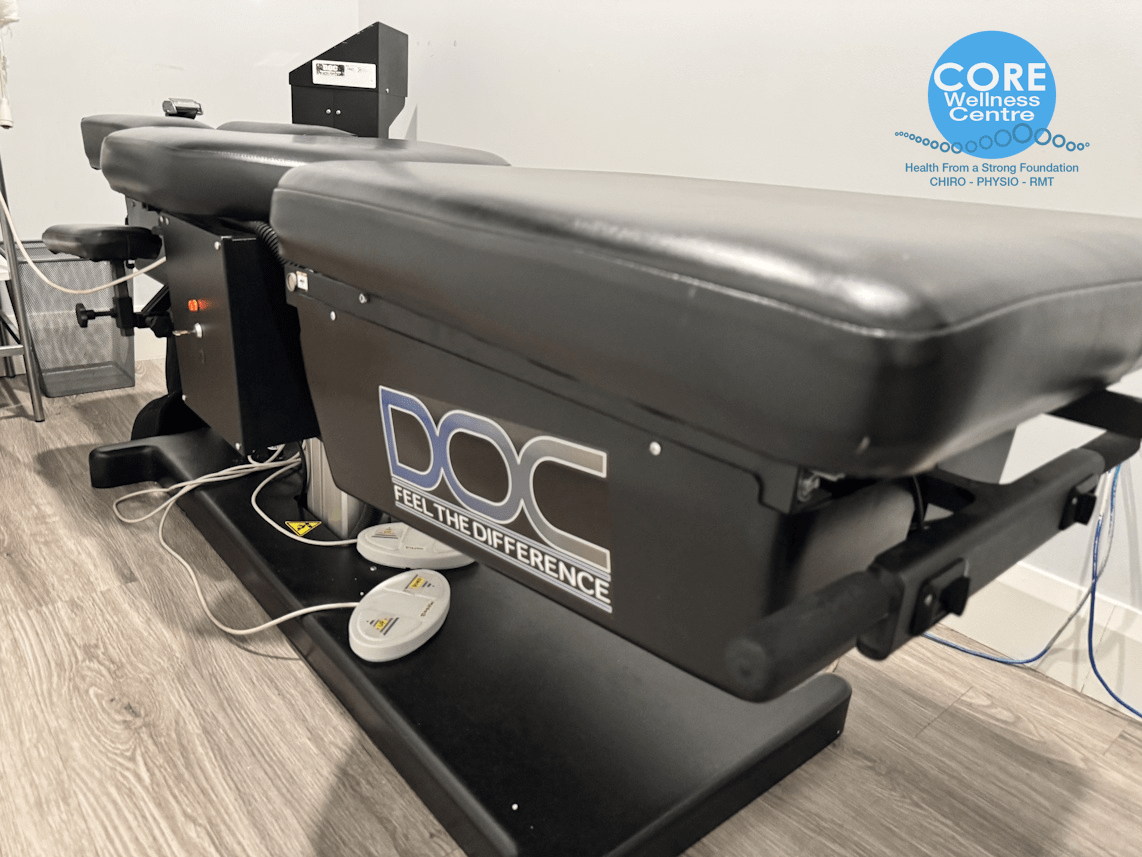
Using a comfortable, motorized traction table, Dr. Kris applies a gentle, rhythmic stretching force to the lumbar spine that creates negative pressure inside the compressed disc, drawing herniated material back toward the centre of the disc and relieving the pressure on nearby nerve roots. Over a course of treatment, spinal decompression supports real structural healing of the disc and provides lasting relief from sciatic nerve pain.
Y-Strap Adjustments
For patients carrying significant compressive load in the lumbar spine, common in athletes, manual workers, and people with chronic postural strain, the Y-strap adjustment provides a decompressive force along the full length of the spine.
This gentle elongation relieves pressure at the disc levels, reduces deep muscle tension, and creates an immediate sense of spinal release and mobility.
Dr. Kris’s Assessment and Care Process
At Core Wellness Centre, every patient begins with a thorough assessment before any treatment begins. Dr. Kris will take a complete history of your symptoms and their history, perform a postural analysis using digital imaging to identify the source and nature of your pain, and take in-house X-rays if clinically required.
From this assessment, Dr. Kris builds a personalized care plan, specific to your diagnosis, your lifestyle, and your goals. No referral required.
How Physiotherapy Addresses Lower Back Pain
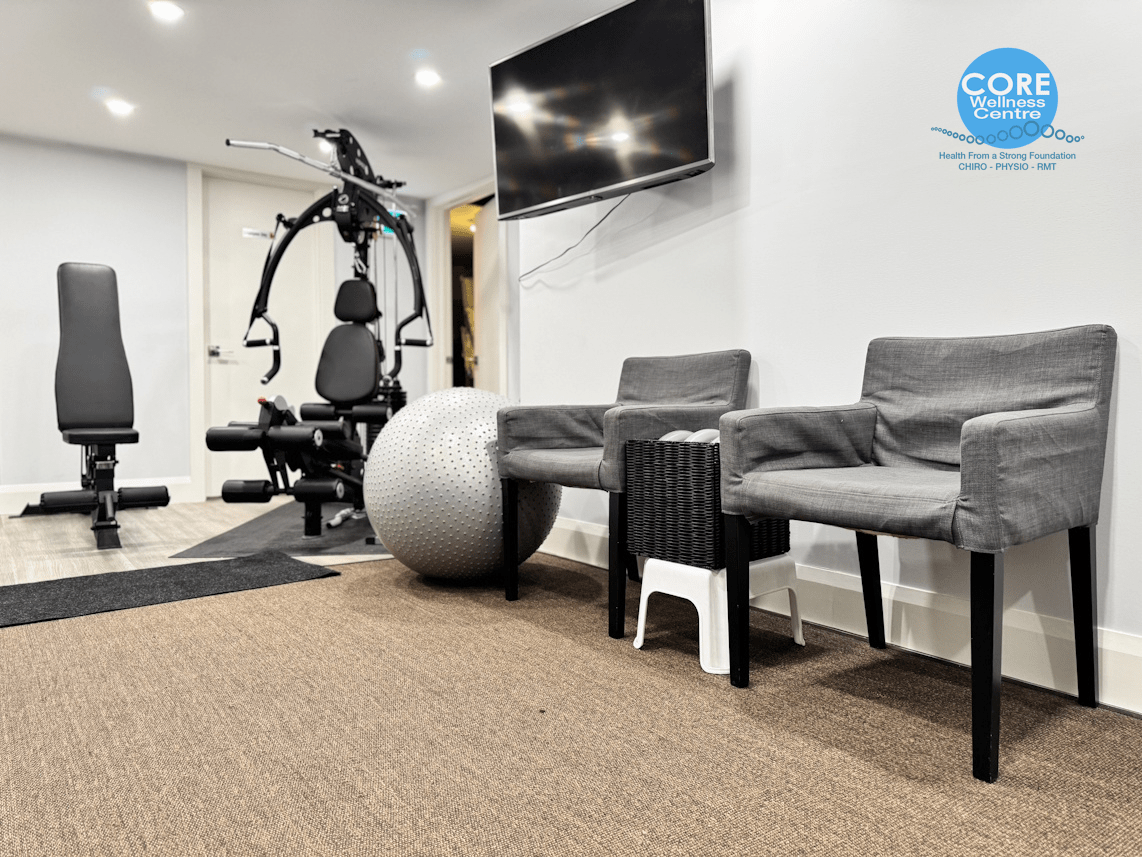
While chiropractic care focuses on spinal alignment and nerve function, physiotherapy at Core Wellness Centre addresses the full picture, how you move, what muscles are weak or tight, and what is driving the mechanical stress on your lower back in the first place.
Manual Therapy
Our physiotherapists use a range of hands-on treatment techniques to reduce pain, restore mobility, and support healing:
Joint mobilization: gentle, guided movements applied to restricted spinal and hip joints to restore normal range of motion and reduce pain without aggressive manipulation.
Soft tissue release: targeted manual pressure applied to tight muscles, myofascial restrictions, and trigger points in the lower back, glutes, and hip flexors – the muscle groups most commonly implicated in lumbar pain.
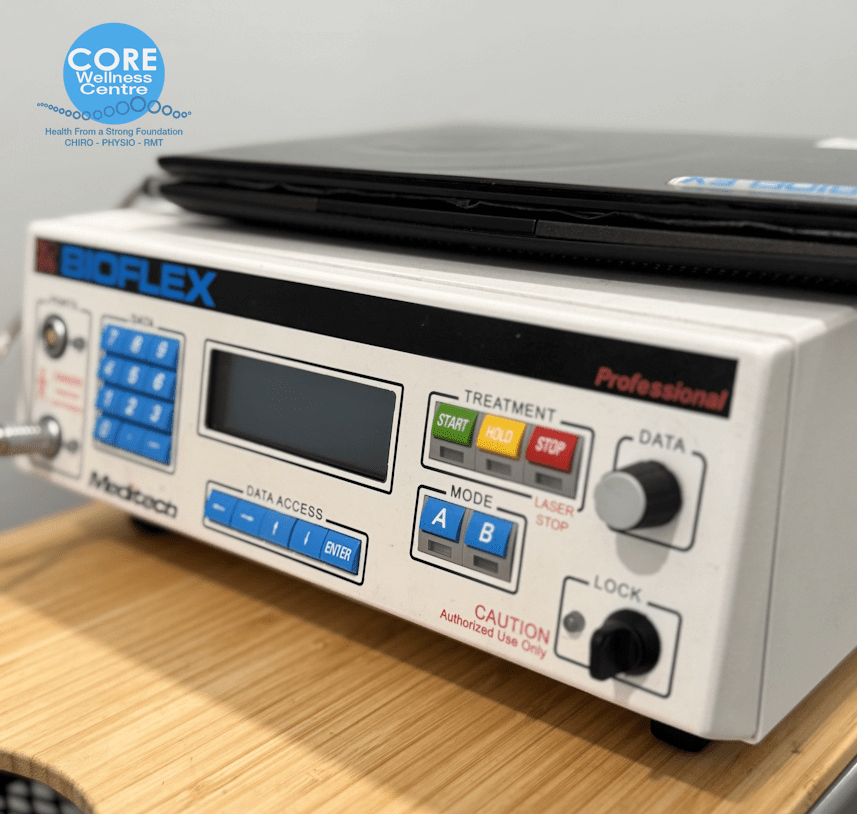
Cold Laser Therapy for Lower Back Pain
Cold laser therapy uses focused, low-level light energy to penetrate deep into injured lumbar tissue — stimulating cellular repair, reducing inflammation, and easing pain without medication, needles, or any discomfort whatsoever.
For patients in the acute phase of a lower back injury, cold laser therapy accelerates the natural healing process and helps calm the acute inflammatory response. For patients with chronic lower back pain, it provides a healing stimulus that keeps tissue repair progressing between appointments.
Shockwave Therapy for Chronic Lower Back Pain
For patients with persistent, stubborn lower back pain that has not fully responded to manual treatment, particularly those with chronically tight paraspinal muscles, deep trigger points, or soft tissue that has lost its ability to heal, shockwave therapy provides a powerful reset.
By delivering rapid acoustic pressure pulses into the affected tissue, shockwave therapy restarts the body’s healing response, stimulates new blood vessel formation, and breaks down the chronic restrictions that keep lower back pain cycling. Significant pain reduction and functional improvement have been demonstrated across multiple clinical studies for chronic lumbar conditions.
Your Individualized Rehabilitation Exercise Program
The most important long-term tool for lower back pain recovery is a well-designed, progressive exercise program built specifically for your body and your goals.
At Core Wellness Centre, your physiotherapy exercise program is never a generic handout. It is a plan built from your assessment findings and updated at every visit as you progress.
The Core Wellness Centre Integrated Approach
One of the most significant advantages of choosing Core Wellness Centre for your lower back pain treatment is that Dr. Kris and our physiotherapy team work together under one roof. Your care is coordinated, not fragmented.
Both practitioners communicate directly about your assessment findings and your progress, ensuring that your chiropractic care and your physiotherapy program are always working in the same direction, at the right pace, toward the same outcome.
Research consistently shows that this kind of integrated, multidisciplinary approach produces better results than either discipline in isolation, particularly for complex or chronic lower back pain cases.
Your Lower Back Pain Has a Cause. It Also Has a Solution.
Lower back pain is incredibly common, but common does not mean it is something you simply have to live with. Whether you are dealing with your first episode of acute lumbar pain or you have been managing a recurring or chronic condition for years, the right diagnosis and the right treatment plan make an enormous difference in how quickly and completely you recover.
No two lower back pain cases are the same. The cause, the contributing factors, and the most effective treatment approach are unique to your body, your history, and your lifestyle. That is why a proper, individualized assessment is always the right starting point, not a generic exercise video, not a self-diagnosis from a search engine, and not another round of pain medication that masks the symptoms without addressing the source.
At Core Wellness Centre in Midtown Toronto, Dr. Kris and our physiotherapy, osteopathy and RMT teams are here to give you the clarity, the care, and the hands-on treatment you need to get back to your life, without lower back pain holding you back.
No referral required.
Your lower back pain has a cause, and a solution. Book your assessment at Core Wellness Centre today and take the first step toward lasting relief.
Struggling with lower back pain?
Call Core Wellness Centre Today on (416) 479 – 8311
We offer Direct Billing and Facilitate WSIB and MVA Claims
Frequently Asked Questions About Lower Back Pain
1. What is the most common cause of lower back pain?
The most common cause is a muscle strain or ligament sprain, an overstretching or partial tearing of the muscles and connective tissue in the lower back from lifting, twisting, or sudden movement. However, herniated discs, poor posture, and sacroiliac joint dysfunction are also extremely common, which is why a proper assessment is important to identify what is actually driving your pain.
2. How do I know if my lower back pain is serious?
Most lower back pain is not medically serious and responds well to conservative care. However, seek emergency care immediately if your back pain is accompanied by loss of bladder or bowel control, severe progressive leg weakness, back pain following a major trauma, or fever and unexplained weight loss. For all other lower back pain that is not improving, a professional assessment is the safest and smartest next step.
3. Should I see a chiropractor or physiotherapist for lower back pain?
Both are highly effective for lower back pain, and the best approach often involves both working together. Chiropractors excel at diagnosing and correcting spinal alignment, relieving nerve compression, and applying spinal decompression. Physiotherapists focus on movement assessment, muscle rehabilitation, and exercise programming. At Core Wellness Centre, Dr. Kris and our physiotherapy team work together as an integrated team, giving you the benefit of both disciplines under one roof.
4. Can lower back pain go away on its own?
Mild muscle soreness from unusual activity often resolves within a few days with gentle movement and rest. However, lower back pain caused by herniated discs, nerve compression, joint dysfunction, or postural imbalances rarely resolves on its own, and typically worsens or recurs without proper treatment. If your pain has been present for more than a week or two, professional assessment is strongly recommended.
5. How long does lower back pain usually last?
Acute lower back pain typically improves within two to six weeks with appropriate treatment. Chronic lower back pain, present for more than 12 weeks, takes longer to resolve and requires a more comprehensive approach, but significant improvement is achievable for most patients within two to four months of consistent, evidence-based care.
6. What is the difference between acute and chronic lower back pain?
Acute lower back pain refers to pain present for less than six weeks, usually with a clear cause and high potential for full recovery. Chronic lower back pain refers to pain lasting more than 12 weeks, which involves more complex physical and neurological factors but remains very treatable with the right approach.
7. Is it safe to exercise with lower back pain?
In many cases, yes, entle movement is actually beneficial and recommended. Complete rest is no longer advised for the majority of lower back pain conditions. Your physiotherapist will prescribe specific exercises appropriate for your injury and progression level. Heavy loading, high-impact exercise, or movements that significantly worsen your pain should be avoided until you have been assessed.
8. What is sciatica and how is it different from regular back pain?
Sciatica refers to pain, tingling, or numbness that radiates from the lower back or buttock down through the leg, caused by compression of the sciatic nerve, most commonly from a herniated lumbar disc.
Regular lower back pain stays in the lower back and does not radiate into the leg. Sciatica is a sign of nerve involvement and typically benefits from specific treatments like spinal decompression and neural mobilization physiotherapy.
9. Can poor posture cause lower back pain?
Yes, absolutely. Prolonged sitting, forward-head posture, and rounded shoulders all alter the alignment and mechanics of the lower back over time, leading to disc stress, muscle imbalances, and joint irritation. Postural correction is a central component of lower back pain rehabilitation at Core Wellness Centre.
10. Do I need an X-ray or MRI for lower back pain?
Not always. Most lower back pain can be accurately diagnosed through a thorough physical examination without imaging. Dr. Kris will take in-house X-rays when they are clinically indicated, for example, to assess spinal alignment, rule out fractures, or evaluate degenerative changes. If an MRI is warranted to assess soft tissue structures such as discs and nerve roots, a referral will be provided.
11. What should I do immediately after throwing my back out?
Stay as calm and comfortable as possible. Avoid staying completely still, gentle movement, within pain tolerance, is better than lying flat.
Apply heat to the area if it eases the muscle spasm. Avoid activities that significantly increase your pain. Book an assessment as soon as possible, the sooner treatment begins, the faster and more complete your recovery will be.
12. Is chiropractic care safe for lower back pain?
Yes. Chiropractic care for lower back pain is well-supported by research and is considered safe when performed by a licensed chiropractor following a proper assessment. Dr. Kris tailors his treatment techniques to each patient’s specific condition, age, and comfort level, using gentle, appropriate methods at every stage of recovery.
13. How many physiotherapy sessions will I need for lower back pain?
This depends on the cause and severity of your condition. Acute muscle strains may require four to eight sessions over two to three weeks. More complex conditions involving disc herniations, nerve compression, or chronic pain typically require eight to sixteen sessions over six to twelve weeks, with ongoing home exercise. Your physiotherapist will give you a clear treatment timeline based on your assessment.
14. Can lower back pain be caused by stress?
Yes. Chronic psychological stress causes sustained muscle tension throughout the body, particularly in the lower back, neck, and shoulders. Stress also reduces the body’s capacity to recover from physical injury and lowers the pain threshold, making existing lower back problems feel worse. Addressing stress as part of a comprehensive lower back pain recovery plan produces better outcomes than treating only the physical components.
15. How can I prevent lower back pain from coming back?
The most effective lower back pain prevention strategies are: maintaining a strong and well-activated core, addressing hip mobility restrictions, correcting postural habits at your desk and during daily activities, staying physically active with regular walking and strength training, and attending regular maintenance chiropractic care to keep the spine aligned and functioning optimally. Your physiotherapist will build a specific prevention program based on the factors that made you vulnerable to injury in the first place.
This article is intended for informational purposes only and does not constitute medical advice. Always consult a qualified healthcare professional for diagnosis and personalized treatment recommendations. If you are experiencing severe or worsening symptoms, seek medical care immediately.