
Numbness and tingling symptoms that appear, such as that strange pins-and-needles feeling in your fingers, or the numbness that spreads across the bottom of your foot when you have been sitting for a while. Or for example, the tingling sensation that shoots down your arm when you turn your head a certain way, these are the kinds of symptoms that stop you mid-task and make you quietly wonder what is going on?
Numbness and tingling in the hands or feet, is medically described as paresthesia, is a common searched health symptoms online, because unlike pain which feels familiar, numbness and tingling feel unfamiliar and unpredictable.
Sometimes the cause is simple and harmless, like when you fell asleep on your arm, or have sat with your legs crossed for too long, but when numbness and tingling in the hands or feet occurs regularly, or comes on without an obvious reason, or is accompanied by other symptoms like weakness or radiating pain, it is your body sending you a signal that something needs attention.
At Core Wellness Centre in Midtown Toronto, Dr. Kris and our physiotherapy team see patients with nerve-related symptoms regularly. In many cases, the cause is a compressed or irritated nerve in the spine, something that responds extremely well to chiropractic care and physiotherapy when diagnosed and treated correctly.
This article will explain what is actually happening when you feel numbness and tingling, the most common causes, the warning signs that require urgent care, and exactly how our team at Core Wellness Centre can help you find the source of the symptom and feel better.
Tingling in Your Hands or Feet Is Trying to Tell You Something.
CALL us on (416) 479 – 8311 TODAY or Simply Book Online Below
We offer Direct Billing and Facilitate WSIB and MVA Claims
What Happens When There's Numbness and Tingling ?

To understand why you are feeling numbness or tingling in your hands or feet, it helps to understand how your nervous system works.
Your nervous system is essentially your body’s electrical wiring. Your brain sends signals down through your spinal cord, which then branches out into a network of nerves that travel to every part of your body, your arms, hands, legs, and feet included.
These nerves carry two types of signals: motor signals (tells your muscles to move) and sensory signals (carries information like touch, temperature, pain, and pressure back to the brain).
When everything is working properly, this communication happens seamlessly and you are not aware of it at all, however, numbness and tingling occur when this communication is disrupted.
When a nerve is compressed, stretched, irritated, or starved of adequate blood supply anywhere along its path, from the spine all the way to the fingertips, the signal it carries becomes distorted or blocked, and the result is a sensation your brain interprets as numbness (reduced or absent feeling), tingling (a buzzing or pins-and-needles sensation), burning, or a combination of all three.
Think of it like a garden hose. When the hose is flowing freely, water reaches the end cleanly. If you step on the hose somewhere in the middle, the flow at the far end is reduced or cut off.
The same principle applies to your nerves. The location where the nerve is being compressed or irritated often determines where in your body you feel the symptoms, which is why a problem in your neck can create tingling in your fingers, and a problem in your lower back can produce numbness in your feet.
This concept, where the source of the problem is in a different location than where the symptoms appear, is called referred nerve symptoms or radiculopathy, and it is the most important thing to understand about numbness and tingling in the hands and feet.
The Most Common Causes of Numbness and Tingling

1. Cervical Disc Herniation (Pinched Nerve in the Neck)
The cervical spine, the seven vertebrae that make up your neck, is one of the most common sources of numbness and tingling in the hands and arms. Between each vertebra sits a soft disc that acts as a cushion.
When a disc in the neck becomes herniated or bulges outward, from injury, poor posture, degeneration, or repetitive strain, it can press directly against one of the nerve roots branching out from the spinal cord.
Because these nerve roots travel down into your arms and hands, a compressed nerve in the neck frequently produces symptoms not in the neck itself, but further along the nerve’s path, in the shoulder, arm, forearm, hand, or specific fingers.
This condition is called cervical radiculopathy, and it is an extremely common cause of arm and hand numbness and tingling. The specific area affected depends on which disc is herniated and which nerve is compressed.
2. Lumbar Disc Herniation and Sciatica (Pinched Nerve in the Lower Back)
Just as disc herniations in the neck cause arm and hand symptoms, disc herniations in the lower back can compress the nerve roots that travel down through the buttock and leg, producing a condition most people know as sciatica.
Sciatica is characterized by pain, numbness, tingling, or burning that radiates from the lower back or buttock down through the back of the thigh, into the calf, and sometimes all the way into the foot and toes. It typically affects one leg at a time and can range from a mild, intermittent tingling to a severe, disabling electric-shock sensation.
3. Carpal Tunnel Syndrome
Carpal tunnel syndrome occurs when the median nerve, which travels through a narrow channel (the carpal tunnel) at the wrist, becomes compressed due to swelling, repetitive strain, or anatomical changes in the wrist. It is one of the most frequently diagnosed causes of hand and finger numbness.
Classic carpal tunnel symptoms include:
- Numbness and tingling in the thumb, index, middle, and part of the ring finger
- Symptoms that are worse at night or upon waking
- A tendency to shake the hand to relieve the sensation
- Weakness in grip strength over time
Carpal tunnel syndrome is common in people who perform repetitive wrist and finger movements, including keyboard users, assembly line workers, musicians, and tradespeople.
4. Thoracic Outlet Syndrome
The thoracic outlet is the space between your collarbone and first rib, a narrow passageway through which nerves, arteries, and veins travel from the neck into the arm. When this space becomes compressed, due to tight muscles, poor posture, a cervical rib, or repetitive overhead activity, the nerves and blood vessels passing through can be squeezed, producing numbness and tingling throughout the arm and hand.
Thoracic outlet syndrome (TOS) is often overlooked and misdiagnosed because its symptoms closely resemble those of cervical disc herniation or carpal tunnel syndrome. It is particularly common in people who perform overhead work, athletes involved in throwing and swimming, and individuals with a forward-head posture.
5. Peripheral Neuropathy
Peripheral neuropathy refers to damage or dysfunction of the peripheral nerves, the nerves outside of the brain and spinal cord that serve the extremities. Unlike radiculopathy (which is caused by nerve compression at the spine), peripheral neuropathy involves damage to the nerves themselves.
Peripheral neuropathy typically presents as a symmetric, stocking-and-glove pattern of numbness and tingling, affecting both hands or both feet equally, starting at the tips and gradually moving up the limb.
6. Poor Posture and Nerve Compression From Sustained Positions
Sometimes the cause of numbness and tingling is not a structural injury at all, but rather prolonged compression of a nerve from a sustained posture or position. Common examples include:
- Sitting with crossed legs compressing the peroneal nerve at the outer knee, producing temporary foot drop and tingling in the outer lower leg and foot
- Sleeping on a bent arm, compressing the ulnar nerve at the elbow, producing the classic “falling asleep” tingling in the ring and little finger
- Prolonged forward-head posture at a desk compressing cervical nerve roots, producing intermittent tingling in the hands that worsens as the workday progresses
While these position-related episodes are usually temporary, their recurrence is often a sign of an underlying alignment issue or posture dysfunction that warrants assessment.
Plain Language Meaning
Paresthesia
- The medical term for numbness, tingling, or pins-and-needles sensations
Radiculopathy
- Nerve symptoms caused by compression at the spine
Cervical radiculopathy
- Nerve compression in the neck causing arm and hand symptoms
Lumbar radiculopathy
- Nerve compression in the lower back causing leg and foot symptoms
Sciatica
- Radiating nerve pain down the leg from a compressed sciatic nerve
Peripheral neuropathy
- Damage to the nerves outside the spine, often affecting hands and feet
Neural tension
- Tightness or restriction in a nerve’s ability to move freely
Nerve impingement
- A nerve being pinched or pressed upon
Numbness and Tingling Has a Source. We Help to Find It.
CALL us on (416) 479 – 8311 TODAY or Simply Book Online Below
We offer Direct Billing and Facilitate WSIB and MVA Claims
When to Seek Urgent Medical Attention
Most cases of numbness and tingling in the hands or feet have a musculoskeletal cause, a compressed nerve, a herniated disc, a tight muscle group, that responds well to chiropractic and physiotherapy treatment.
However, certain combinations of symptoms indicate a more serious medical condition that requires immediate attention.
Go to the emergency room immediately if your numbness and tingling is accompanied by:
- Sudden weakness or inability to move an arm or leg
- Numbness or tingling on one side of the face, combined with arm or leg weakness
- Sudden, severe headache unlike anything you have experienced before
- Loss of bladder or bowel control, a possible sign of cauda equina syndrome
- Tingling or numbness following a head or neck injury
- Difficulty speaking, swallowing, or understanding others
- Sudden changes in vision or confusion
See your chiropractor or physiotherapist promptly if you experience:
- Numbness and tingling that has been present for more than a few days with no clear cause
- Symptoms that are gradually spreading or worsening
- Weakness in the hand, arm, leg, or foot alongside the tingling
- Symptoms that consistently wake you from sleep
- Numbness and tingling that follows a specific path, for example, always down the same arm or the same leg
- Symptoms that are triggered or worsened by specific neck or back movements
If you are in any doubt, always err on the side of having the symptom assessed. A proper examination can quickly clarify whether your symptoms need emergency care, routine medical investigation, or chiropractic and physiotherapy treatment.
Chiropractic Care for Nerve Compression and Numbness

Chiropractic care is one of the most effective conservative treatments available for nerve-related symptoms caused by spinal compression.
The goal of chiropractic treatment is to identify and correct the structural problems in the spine that are putting pressure on the affected nerve, removing the source of irritation and allowing the nervous system to function normally again.
For patients with numbness and tingling, chiropractic treatment at Core Wellness Centre may include:
Manual Adjustments
Targeted chiropractic adjustments restore proper alignment to the vertebrae in the cervical or lumbar spine that are compressing or irritating nerve roots.
By restoring normal joint position and mobility, adjustments reduce mechanical pressure on the nerve, decrease inflammation in the surrounding tissue, and allow the nerve to begin healing and functioning properly again.
Many patients experience a noticeable reduction in tingling and improvement in sensation within the first few treatment visits as the pressure on the nerve is relieved.
Physiotherapy for Numbness and Tingling
While chiropractic care addresses the structural source of nerve compression, physiotherapy for numbness and tingling focuses on restoring normal nerve mobility and function, and ensuring that the muscles and movement patterns supporting your spine are strong enough to prevent the problem from returning.
Cold Laser Therapy for Nerve Pain and Tingling

Cold laser therapy, also known as low-level laser therapy (LLLT), is a painless, non-invasive treatment that uses focused light energy to stimulate healing at the cellular level. For patients with nerve-related symptoms, cold laser therapy offers two important benefits:
1. It reduces inflammation around the compressed nerve.
Nerve compression is almost always accompanied by local inflammation in the surrounding tissue — and that inflammation makes the nerve even more sensitive and painful. Cold laser therapy penetrates into the inflamed tissue and calms the inflammatory process at the cellular level, reducing pressure on the nerve and easing the intensity of tingling and pain symptoms.
2. It supports nerve healing and regeneration.
Research into photobiomodulation, the process by which laser light interacts with biological tissue, has shown that low-level laser therapy can stimulate the repair of damaged nerve tissue, accelerate the restoration of normal nerve conduction, and reduce neuropathic (nerve) pain.
For patients with chronic nerve compression or peripheral neuropathy, cold laser therapy provides a healing stimulus that cannot be achieved through manual treatment or exercise alone.
Shockwave Therapy for Nerve-Related Pain
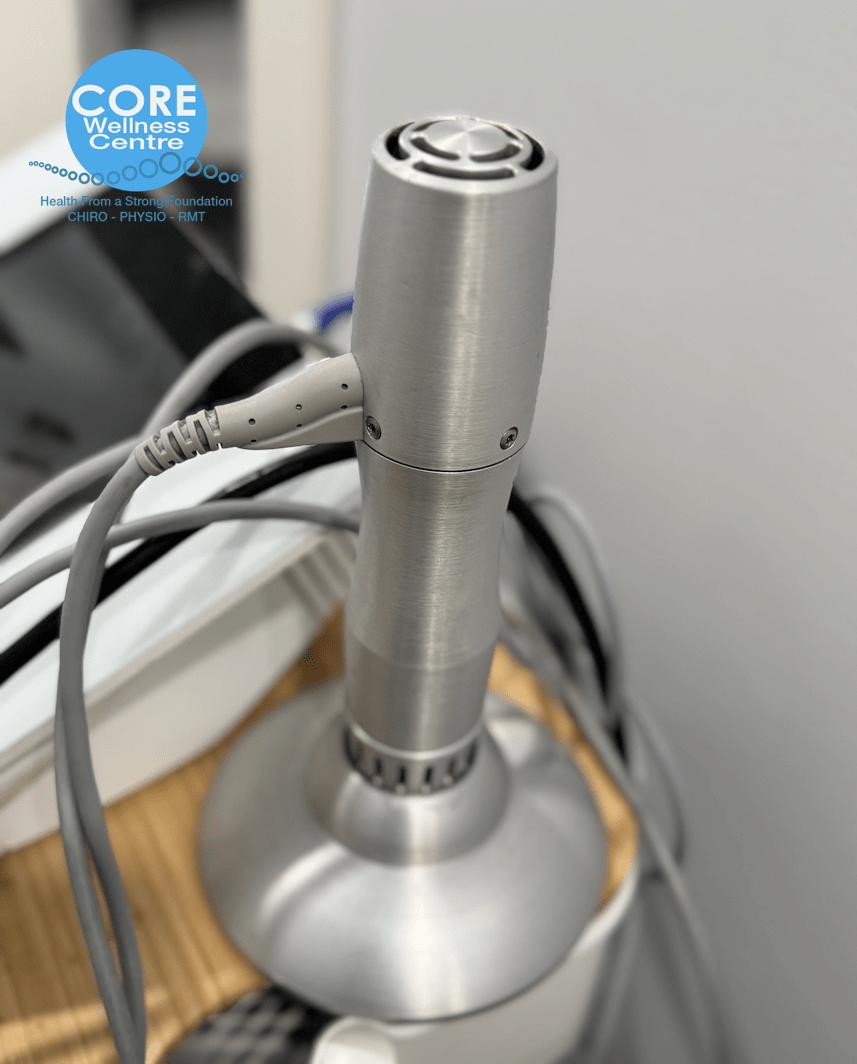
For patients with persistent, treatment-resistant nerve symptoms, particularly those involving chronic muscle tension, myofascial trigger points, or soft tissue compression of nerve pathways, shockwave therapy provides a powerful additional treatment option.
Shockwave therapy delivers rapid acoustic pressure pulses into the affected tissue through a handheld device. For nerve-related symptoms, it is particularly effective when:
- Tight, chronically contracted muscles are compressing nerves along their path, for example, the scalene muscles in thoracic outlet syndrome, the piriformis muscle in sciatica, or the forearm flexors in carpal tunnel syndrome
- Deep trigger points in paraspinal or extremity muscles are generating referred nerve-like symptoms
- Chronic soft tissue restrictions are limiting nerve mobility and preventing full recovery through exercise and manual therapy alone
Shockwave therapy breaks up these deep restrictions, stimulates new blood flow and tissue remodelling, and helps the body clear chronic inflammation that has been maintaining nerve irritation.
For patients who have been struggling with numbness and tingling for months without resolution, shockwave therapy can be a turning point in their recovery.
Numbness and tingling in the hands or feet is not something to ignore and hope disappears. It is your nervous system signalling that something along the nerve pathway, from the spine to the fingertips, is not working the way it should.
The good news is that the most common causes of nerve-related symptoms respond extremely well to the kind of integrated, hands-on care that Core Wellness Centre specializes in.
Dr. Kris and our physiotherapy team are experienced in identifying exactly where nerve compression is occurring, why it is happening, and what combination of chiropractic care, spinal decompression, cold laser therapy, and targeted exercise will resolve it.
Book your assessment at Core Wellness Centre today and get the answers, and the relief, you have been looking for.
Frequently Asked Questions (FAQ)
Can numbness and tingling in the hands or feet go away on its own?
It depends on the cause, temporary tingling from sitting in one position too long resolves quickly once the pressure is removed. If your symptoms are recurring, worsening, or present for more than a few days, have them assessed.
Is numbness and tingling always caused by the spine?
No, but spinal nerve compression is a common cause, particularly for symptoms that affect one side, follow a specific path down the arm or leg, or are associated with neck or back pain. A thorough assessment is necessary to identify the specific cause.
Can a chiropractor help with carpal tunnel syndrome?
Yes, many cases of carpal tunnel syndrome respond well to chiropractic care, particularly when there is also nerve compression in the cervical spine contributing to the symptoms (a condition sometimes called “double crush syndrome”).
Dr. Kris can assess whether the compression is at the wrist, the neck, or both, and develop a treatment plan accordingly.
What is the difference between numbness and tingling from a nerve problem vs. poor circulation?
Nerve-related tingling tends to follow a specific pattern, affecting defined areas of the hand or foot corresponding to a particular nerve’s territory.
Circulation-related symptoms tend to be more diffuse, often affect the entire limb, and are associated with colour changes (pallor, blueness), temperature changes, or symptoms that improve with movement. A proper assessment can clarify which system is involved.
Will I need surgery for a herniated disc causing tingling in my arm or leg?
The majority of patients with disc herniations and radiculopathy (including sciatica) respond well to conservative care, chiropractic adjustments, spinal decompression, physiotherapy, and soft tissue treatment, without requiring surgery.
How soon should I seek treatment for numbness and tingling?
As soon as possible. If you have been experiencing unexplained numbness and tingling, book your assessment at Core Wellness Centre.
Is it safe to exercise when I have numbness and tingling?
It depends on the cause and severity. Light, controlled movement is generally beneficial, and in many cases, specific mobilization exercises prescribed by your physiotherapist are an important part of recovery.
High-impact exercise, heavy loading of the spine, or any activity that significantly worsens your symptoms should be avoided until you have been properly assessed.
Dr. Kris and our physiotherapy team will give you specific guidance on safe activity during your recovery.
This article is written for informational purposes only and does not constitute medical advice. If you are experiencing severe, sudden, or worsening neurological symptoms, seek emergency medical care immediately. Always consult a qualified healthcare professional for diagnosis and personalized treatment recommendations.